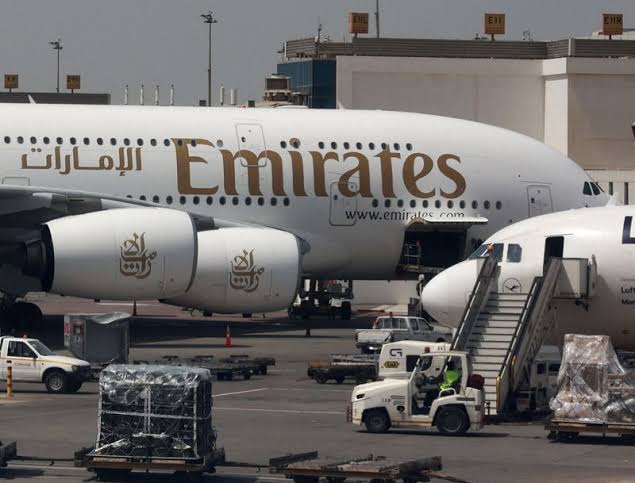
Emirates profit slump reached 66% in the first half of 2026-27 as Gulf conflict disruptions and rising jet fuel costs weighed on earnings
DUBAI, United Arab Emirates, 5 November 2026, Emirates Group, chaired and led by Sheikh Ahmed bin Saeed Al Maktoum, reported a 66 per cent fall in net profit for the first half of its 2026-27 financial year, as conflict-related aviation disruption and rising jet fuel prices weighed on the Dubai-based airline group.
The group recorded after-tax profit of AED3.6 billion, equivalent to about US$1 billion, for the six months ended 30 September, compared with AED10.6 billion in the same period a year earlier.
Revenue declined 12 per cent to AED66.2 billion, or approximately US$18 billion.
Emirates airline, the group’s main carrier, reported after-tax profit of AED3.3 billion, or US$903 million, down 66 per cent year on year. Airline revenue fell 13 per cent to AED56.9 billion.
Sheikh Ahmed described the period as challenging, citing the effects of regional instability and higher fuel prices.
“It has been a demanding six months,” he said, adding that customer demand had remained firm and cargo operations had made a strong contribution. He said global jet fuel prices had doubled against the same period last year, putting pressure on costs and profitability.
The conflict disrupted air travel across the Middle East through intermittent airspace closures, flight diversions and government travel advisories. Dubai International Airport, a major global connecting hub, was also targeted during the early stages of the conflict, affecting flight schedules and visitor flows.
Emirates carried 21.8 million passengers during the six-month period, 22 per cent fewer than a year earlier. Passenger capacity fell 17 per cent, while the average seat factor dropped to 72 per cent from 79.5 per cent, reflecting the reduced schedule and weaker passenger traffic.
Fuel costs were a significant pressure point. The airline’s fuel expenses before hedging rose 60 per cent year on year, despite lower fuel consumption as operations contracted.
Fuel remained its largest operating cost, accounting for about 34 per cent of operating expenses. Hedging gains helped limit the net increase in fuel costs.
Cargo operations provided a measure of resilience. Emirates reported a 52 per cent increase in cargo revenue, supported by demand for freight capacity during a period of disruption to air and maritime transport.
The group said cargo performance helped sustain revenue even as passenger volumes weakened.
The wider group, which includes aviation services provider dnata, also remained profitable. However, dnata’s after-tax profit fell 56 per cent to AED309 million, while revenue declined 7 per cent to AED11 billion, reflecting reduced activity in some of its UAE and UK businesses.
Despite the downturn, Emirates Group retained substantial liquidity. Its cash reserves stood at AED54.1 billion, or US$14.7 billion, at the end of September, down from AED59.6 billion at the end of March.
The group said funds were used to support operational needs, aircraft pre-delivery payments and debt obligations.
The company has also continued investing in its fleet and infrastructure, including a major aircraft retrofit programme and a new engineering and maintenance facility at Al Maktoum International Airport.
These investments are intended to support its long-term operations despite the immediate pressure on earnings.
Sheikh Ahmed said the group was approaching the second half of the financial year with “measured optimism”, while maintaining close attention to costs and geopolitical developments.
The results underline the vulnerability of Gulf aviation to prolonged regional instability, given the region’s reliance on connecting passengers travelling between Europe, Asia, Africa and the Americas.
While Emirates’ cash position and cargo business have helped it remain profitable, the duration of the conflict and the trajectory of fuel prices will remain key factors shaping its recovery.





 news1 year ago

 politics1 year ago

 entertainment2 years ago

 entertainment2 years ago

 politics2 years ago

 politics1 year ago

 events2 years ago

 events2 years ago