Lea Perekrests urges inclusive, community-led peacebuilding in Nigeria ahead of the All Nigeria Rotary Peace Summit in Lagos.
International peacebuilding expert and Director of Partnerships at the Institute for Economics and Peace (IEP), Lea Perekrests, has called for stronger institutions, inclusive governance and grassroots participation to achieve sustainable peace in Nigeria.
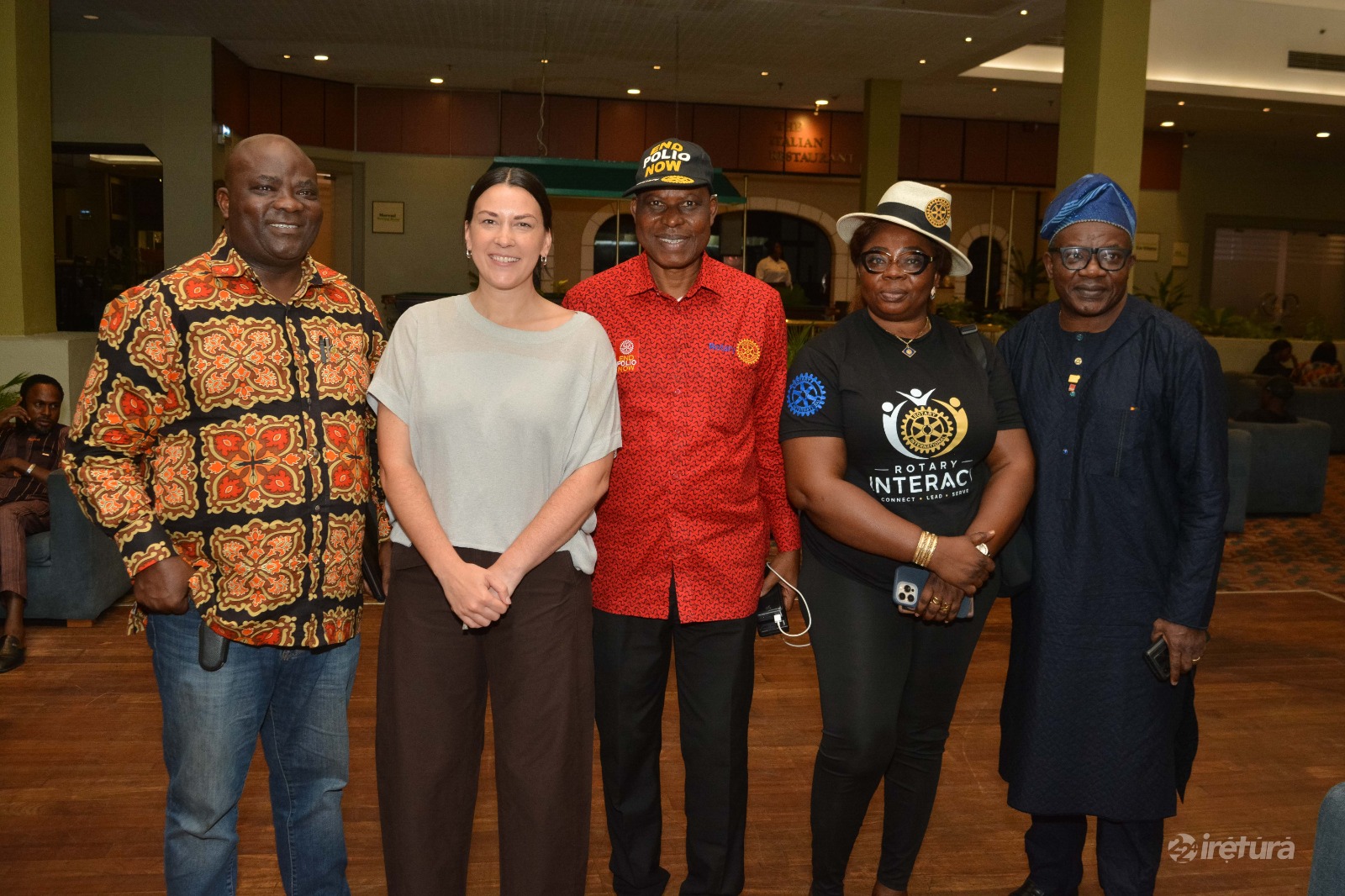
Perekrests made the call after arriving in Lagos on Wednesday, 4 November 2026, ahead of the All Nigeria Rotary Peace Summit 2026, where she is expected to deliver the keynote address on Saturday, 7 November.
Speaking to journalists shortly after her arrival, the global peacebuilding expert praised the warmth and hospitality she had experienced in the country, describing Nigerians’ energy as “really, really incredible”.
She, however, stressed that sustainable peace requires more than efforts to end violence, explaining that societies must also develop the institutions, attitudes and structures that support peaceful coexistence.
According to Perekrests, peace has two dimensions: negative peace, which refers to the absence of violence or fear of violence, and positive peace, which involves the conditions that enable societies to thrive.
She explained that Nigeria must move beyond simply responding to conflicts and invest in the social and institutional foundations that prevent violence and strengthen communities.
“Peace is not something that happens overnight. Peace is a very long-term commitment,” she said.
Drawing on the experience of Northern Ireland, Perekrests noted that although a peace agreement had helped reduce violence over more than two decades, divisions and segregation remained within communities.
She said the experience demonstrated that formal agreements could provide an important foundation for peace but would not automatically transform relationships, attitudes and everyday interactions.
On addressing Nigeria’s security challenges across its different regions, she advocated a combination of national coordination and locally driven interventions.
She recommended a whole-of-government approach, stressing that peacebuilding should not be treated as the responsibility of security agencies alone but should involve institutions and departments responsible for education, communication, governance and other aspects of public administration.
At the community level, she emphasised the importance of involving residents in developing solutions that reflect their experiences and needs.
“When it comes to building peace on the ground, at the grassroots level, that’s where it needs to be inclusive of the local voices,” she said.
Perekrests also urged Rotary members and civil society organisations to take greater responsibility for sustaining peace, arguing that the task should not be left exclusively to political leaders or parties involved in formal agreements.
Commenting on the proposed Peace Legacy Accord expected to feature at the summit, she maintained that its success would depend on the willingness of individuals and communities to translate commitments into practical action.
“I think it’s the duty of you, of me, of every Rotary member around the world, to be activists for peace, to be taking action on the local level to build towards peace,” she said.
Her position reflects the Institute for Economics and Peace’s concept of positive peace, which defines it as the attitudes, institutions and structures that create and sustain peaceful societies. The institute identifies these conditions as essential to building resilience, improving societal wellbeing and creating an environment in which human potential can flourish.
The All Nigeria Rotary Peace Summit 2026 will hold on Saturday, 7 November, at the Victoria Garden Event Centre, Alausa, Ikeja, Lagos.
Convened by Rotary International President, Yinka Babalola, the summit will be held under the theme, “Good Governance, Justice and Equity: Foundations for Sustainable Peace”, with the sub-theme, “From Dialogue to Action: Forging a Sustainable Peace Legacy in Nigeria”.
Perekrests is expected to deliver a keynote address titled “Global Perspectives on Good Governance, Justice and Equity as Foundations for Sustainable Peace”.
The gathering will bring together peacebuilding experts, policymakers, academics, security professionals, Rotary leaders and civil society organisations to examine practical approaches to Nigeria’s peace and security challenges.
A major highlight will be the proposed signing of a Peace Legacy Accord and Agenda, alongside the presentation of a summit declaration and communiqué outlining stakeholders’ recommendations and commitments towards sustainable peace.
The summit is expected to provide a platform for dialogue, collaboration and the development of practical commitments aimed at strengthening peacebuilding efforts across Nigeria.






 news1 year ago

 politics1 year ago

 entertainment2 years ago

 entertainment2 years ago

 politics2 years ago

 politics1 year ago

 events2 years ago

 events2 years ago