Mbappe Mao Zedong comment sparks backlash in China, prompting an apology from the Real Madrid star and the termination of two brand partnerships
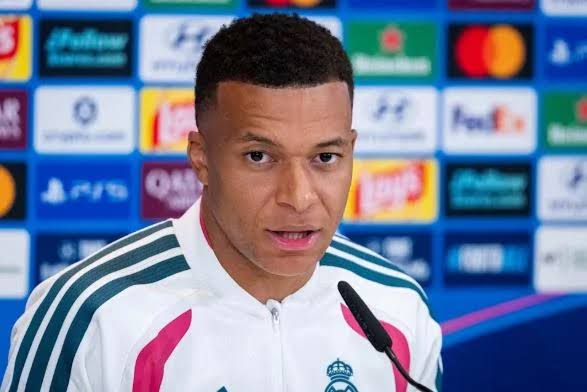
Real Madrid forward Kylian Mbappe has apologised over an “ill-judged” comment about former Chinese leader Mao Zedong after Chinese drinks manufacturer Dongpeng Beverage and dairy producer Mengniu terminated their partnerships with the French football star.
Mbappe, who captains France’s national team, issued the apology on his X account on Tuesday, acknowledging that his remarks had upset people in China and Chinese communities worldwide.
“My comment was ill-judged, and I now understand that it hurt many people in China and in Chinese communities around the world. I apologise to everyone my words have upset,” he said.
The controversy followed the circulation of a video in which the 27-year-old footballer reacted to an internet meme featuring his face superimposed on that of a Chinese leader.
He reportedly described it as the funniest meme he had seen and referred to the figure as “some guy — I think he’s a Chinese dictator”, in an apparent reference to Mao.
Dongpeng Beverage announced on Tuesday that it was ending its partnership with Mbappe, citing its opposition to comments considered offensive to Chinese national sentiment.
“Our company firmly opposes and has a zero-tolerance policy towards any behaviour that offends national sentiments,” the company said.
“With immediate effect, we are terminating all cooperation with Kylian Mbappe,” it added.
Mengniu, one of China’s largest dairy producers, also announced that it was ending its partnership with the Real Madrid forward.
“With immediate effect, our company is terminating all cooperation with Kylian Mbappe,” the company said, adding that it maintained a zero-tolerance policy towards words or actions that hurt the feelings of the Chinese people.
The announcements generated widespread discussion on Chinese social media platform Weibo, where Dongpeng’s decision to end its partnership with the footballer became a trending topic.
Mao, who led the Chinese Communist Party and died in 1976, remains a highly sensitive historical and political figure in China.
Comments perceived as disrespectful towards him can provoke strong public reactions.
Mbappe had previously addressed memes comparing him to historical dictators in an interview with French sports newspaper L’Equipe in September.
“There’s a part of it that’s funny. You can tell that, for some people, it’s all in good fun. But there is another part that’s a bit less funny because of the damage such people have caused throughout history,” he said.
He added that being compared with individuals responsible for mass killings and widespread suffering was uncomfortable.
“Being compared to individuals who murder others, or who have brought misery to millions upon millions of people — well, I don’t think I’ve ever done anything like that in my life,” Mbappe said.
International sports figures have previously faced commercial and public backlash in China over politically sensitive comments concerning Taiwan, Tibet and Hong Kong.
In 2019, a social media post by then-Houston Rockets general manager Daryl Morey expressing support for pro-democracy protesters in Hong Kong prompted Chinese authorities and businesses to suspend NBA-related activities.
NBA games were subsequently absent from Chinese state television broadcasts for about a year.
In 2023, former NBA player Dwight Howard also faced criticism on Chinese social media after referring to Taiwan as a country in a video featuring Taiwan’s then vice president, Lai Ching-te.
Mbappe’s apology comes amid the fallout from the latest controversy and the decisions by Dongpeng Beverage and Mengniu to end their commercial relationships with the footballer.



 news1 year ago
 politics1 year ago
 entertainment2 years ago
 entertainment2 years ago
 politics2 years ago
 politics1 year ago
 events2 years ago
 events2 years ago