FG launches 42 renewable energy projects in Adamawa and Kebbi to deliver nearly 30MW of clean power to underserved communities
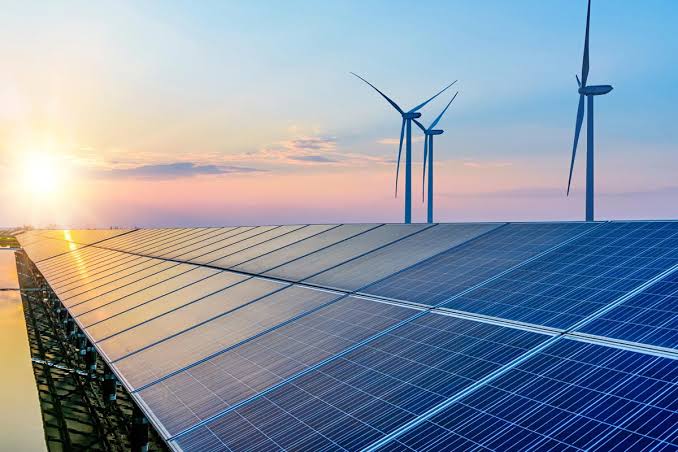
The Federal Government has commenced the construction of 42 renewable energy projects in Adamawa and Kebbi states that will generate nearly 30 megawatts of clean electricity, expanding access to reliable power for tens of thousands of households, businesses and public institutions.
The projects, being implemented by the Rural Electrification Agency in partnership with the Adamawa and Kebbi State governments, comprise 39 interconnected mini-grids across Adamawa and a 3.5-megawatt solar power plant with supporting 33kV electricity infrastructure in Kebbi.
Speaking at the groundbreaking ceremony in Adamawa on Monday, the Minister of Power, Adebayo Adelabu, said the initiative reflects the Federal Government’s commitment to achieving universal electricity access under President Bola Tinubu’s Renewed Hope Agenda.
Adelabu described the Adamawa programme as one of the country’s most transformative decentralised renewable energy initiatives, noting that the projects alone would inject nearly 27 megawatts of clean and reliable electricity into underserved communities.
According to the minister, about 40,000 households and businesses in communities including Kofare, Saminaka, Mbamba, Gulak, Michika, Shuwa, Bazza, Belel, Ganye, Song, Hong, Mubi and Guyuk will benefit from the intervention.
He added that the projects would also provide stable electricity to about 6,000 micro, small and medium-sized enterprises, including welders, tailors, grain millers, cold-room operators, ICT businesses and agro-processors.
More than 100 public institutions, including schools, healthcare facilities and water supply schemes, are also expected to receive improved electricity through the programme.
“Behind every connection is more than a meter. It is a family whose quality of life will improve, a child whose education will be enhanced, an entrepreneur whose business will expand, and a community whose future will become brighter,” Adelabu said.
The minister noted that beyond increasing electricity access, the mini-grids would reduce dependence on petrol and diesel generators, stimulate economic activities in rural communities and encourage greater private sector investment in Nigeria’s renewable energy industry.
Adamawa State Governor Ahmadu Umaru Fintiri described the initiative as a major step towards reducing energy poverty and unlocking new economic opportunities across the state.
Fintiri said discussions that culminated in the investment began during the Rural Electrification Agency’s investment roundtable in Abuja in 2025, where the state government offered incentives including free land, concessional financing and credit guarantees to attract renewable energy developers.
The Managing Director of the Rural Electrification Agency, Dr Abba Abubakar Aliyu, said the projects demonstrate the agency’s commitment to ensuring that underserved communities benefit from Nigeria’s transition to cleaner sources of energy.
Aliyu disclosed that President Tinubu had approved a 750 million US dollar financing facility for the agency to implement interconnected mini-grid projects across the country.
According to him, about 10 million US dollars will be invested in the Kebbi project, which is expected to provide electricity to more than 1,000 households and key public facilities, including the Ahmadu Bello International Airport in Birnin Kebbi.
Aliyu said the long-term success of the initiative would be measured not only by electricity connections but also by the number of businesses created, jobs generated, schools strengthened, healthcare services improved and livelihoods transformed.
In Kebbi State, Governor Nasir Idris officially flagged off the construction of the 3.5-megawatt solar power plant and the Lot 7 Design, Supply and Installation of the 33kV Power Infrastructure Project in Ambursa.
The governor described electricity as a critical driver of economic growth, adding that the solar facility would incorporate battery storage systems capable of supplying power after sunset.
Idris reaffirmed the state’s commitment to the project, revealing that the government provided the project site free of charge to the contractor, Kelm Elicon Joint Venture, to accelerate implementation.
The Chief Executive Officer of Kobeissi Electrical and Mechanical Engineering Ltd, Ali Kobeissi, assured stakeholders that construction would be completed within eight months and appealed to host communities to support the project throughout its execution.
The Adamawa and Kebbi projects form part of the Federal Government’s broader rural electrification strategy aimed at reducing energy poverty, expanding access to affordable electricity, increasing private sector participation and accelerating Nigeria’s transition to renewable energy.
The programme aligns with the country’s wider objective of improving electricity access in off-grid and underserved communities while supporting economic growth through cleaner and more sustainable energy solutions.











 news1 year ago
 politics1 year ago
 entertainment1 year ago
 entertainment1 year ago
 politics1 year ago
 politics1 year ago
 events2 years ago
 events2 years ago