Yari’s hunger claim sparks debate as the APC campaign chief says hardworking Nigerians should be able to afford food
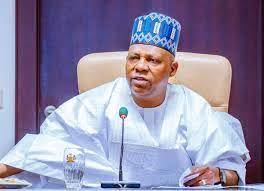
Senator Abdulaziz Abubakar Yari, Director-General of the All Progressives Congress (APC) Presidential Campaign Council, has argued that hardworking Nigerians should be able to put food on their tables if they have money to purchase it, prompting renewed attention to the country’s hunger debate during an APC presidential campaign rally at the Godswill Akpabio International Stadium in Uyo, Akwa Ibom State, on Friday, November 6, 2026.
Yari made the remarks while addressing party supporters at the rally organised in support of President Bola Ahmed Tinubu’s re-election bid in the January 2027 presidential election.
The former Zamfara State governor acknowledged that hunger existed in the country but questioned whether food scarcity was the actual problem, arguing that essential commodities remained available in Nigerian markets.
He challenged residents of Akwa Ibom to explain whether they had gone to markets with money only to discover that rice and other food items were unavailable.
“Akwa Ibom people, from where I came from, we have food in the market. I don’t know, in Akwa Ibom, are there any person who took his money to the market and found out there is no rice?” he asked.
Yari further questioned whether anyone with money in their pocket had been unable to purchase foodstuffs because traders had nothing to sell.
“If there is no food in the market, that is what we are calling hunger. But anyone who is not a lazy person, definitely he will have food on his table,” he said.
The statement has drawn attention because it frames hunger primarily around the physical availability of food, rather than the ability of households to afford what is being sold.
However, the distinction between food availability and food affordability remains central to Nigeria’s wider economic debate, particularly as many households continue to struggle with the rising cost of essential commodities.
The comments come amid persistent concerns about the purchasing power of ordinary Nigerians, with food prices and the cost of basic necessities remaining major challenges for households across the country.
Although food commodities may be available in markets, their prices can place them beyond the reach of families whose incomes have not kept pace with rising living costs.
Nigeria’s economic difficulties have become a major issue in the political contest ahead of the 2027 elections. President Tinubu’s decision to remove the petrol subsidy in May 2023 and introduce changes to the foreign exchange system formed part of broader economic reforms intended to improve public finances and attract investment.
However, the reforms have also contributed to higher living costs and pressure on household budgets, a situation that has continued to attract criticism from opposition parties and economic observers. Reuters has reported that the economic hardship remains a significant test of public support for the President’s re-election campaign.
Yari’s position also follows an earlier controversy involving Tinubu’s comments on the origins of hunger and poverty in Nigeria.
On October 24, 2026, the President blamed previous administrations and opposition politicians for the economic challenges while addressing supporters at the APC presidential campaign flag-off rally at Ranchers Bees Stadium in Kaduna State.
“I hear my opponents talking about hunger. Who created it? They did. They created hunger. They created poverty. We are trying to eradicate it,” Tinubu said.
The President defended his administration’s economic policies, highlighting regular salary payments and promising greater prosperity if Nigerians returned him to office for another term.
His remarks, however, attracted criticism from former Vice-President Atiku Abubakar, the presidential candidate of the African Democratic Congress (ADC).
Atiku described Tinubu’s attempt to blame the opposition for hunger as a “delusional, shameless attempt” to avoid responsibility for the economic difficulties Nigerians were experiencing.
He argued that the administration should be judged by the conditions in which citizens were living rather than by campaign promises.
Similarly, the Nigeria Democratic Congress (NDC), through its National Chairman, Moses Cleopas, criticised the President for shifting responsibility to political opponents.
Cleopas argued that a government entrusted with power should take responsibility for addressing citizens’ welfare rather than blaming its critics.
“It is because of their [ruling APC government] irresponsibility. How will a father wake up one morning to say the reason I cannot feed my children was because of my critics?” he said in an interview with Saturday PUNCH.
Yari’s latest intervention adds another dimension to the debate, as senior APC figures continue to defend the administration’s economic record while opposition politicians demand greater accountability over the rising cost of living.
His remarks also place renewed emphasis on the distinction between having food available in markets and having sufficient income to purchase it.
With the January 16, 2027 presidential election approaching, economic welfare, food affordability and the impact of government policies are expected to remain prominent issues in the campaigns.
For many Nigerians, the central question is not simply whether food is available for sale, but whether their earnings can still afford them a decent meal.









 news1 year ago

 politics1 year ago

 entertainment2 years ago

 entertainment2 years ago

 politics2 years ago

 politics1 year ago

 events2 years ago

 events2 years ago