The Middle East ceasefire faces renewed pressure after fresh Iran-US strikes, missile launches, and rising regional tensions
A fragile Middle East ceasefire between the United States and Iran came under renewed strain on Friday after fresh military exchanges triggered missile alerts across the Gulf, raising fears of a wider regional escalation despite ongoing diplomatic efforts.
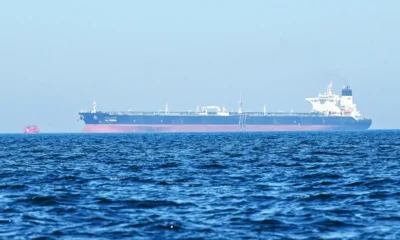
The latest violence erupted after the US military announced strikes on Iranian radar installations following the interception of drones headed towards the Strait of Hormuz, one of the world’s most critical energy shipping routes.
Shortly afterwards, air raid sirens sounded in Kuwait and Bahrain, both key US allies in the Gulf, while explosions were reported in both countries.
Iran’s Revolutionary Guards said they launched missiles at what they described as enemy bases in the region in response to an alleged US incursion into Sirik and Qeshm Island.
According to the US Central Command, Iran fired seven ballistic missiles towards Kuwait and Bahrain. Six were intercepted, while the seventh failed to reach its intended target.
CENTCOM said there were no reports of injuries to US personnel and dismissed Iranian claims that the US Fifth Fleet headquarters in Bahrain had been damaged.
The latest flare-up threatens to undermine the already delicate Middle East Ceasefire, which has been in place since April 8 following a conflict that began nearly 100 days ago and resulted in significant losses among Iran’s senior leadership after US and Israeli military operations.
Earlier on Friday, CENTCOM reported that American forces had intercepted four Iranian drones approaching the Strait of Hormuz before targeting radar facilities in Goruk and on Qeshm Island.
The command said the drones posed an immediate threat to maritime traffic, while the strikes were intended to prevent further attacks against regional shipping lanes.
Iranian state media later reported explosions in the southern city of Sirik, with the Revolutionary Guards describing their missile launches as retaliation against what they called a US invasion.
Kuwait’s military also confirmed that its air defence systems were responding to missile and drone threats, days after an attack on the country’s international airport left one person dead and dozens injured.
Despite the renewed hostilities, Washington moved ahead with arrangements for Iran’s national football team to participate in the FIFA World Cup, which the United States is co-hosting alongside Canada and Mexico.
US Ambassador to Turkey Tom Barrack confirmed that visas had been issued to members of the squad, stating that sport should transcend political divisions and international conflicts.
However, Iran’s Fars news agency reported that some members of the team’s technical and administrative staff were still awaiting travel approval.
An unnamed US administration official said authorities would closely scrutinise all entries linked to the delegation, insisting that security procedures would remain in place.
The Iranian team is scheduled to travel from Turkey to Spain before continuing to its World Cup base camp in Mexico.
Efforts to transform the ceasefire into a lasting peace agreement have repeatedly stalled amid continuing military incidents and deep disagreements between Washington and Tehran.
Mohsen Rezaei, a military adviser to Iran’s Supreme Leader, said negotiations had reached a deadlock and called for the release of approximately $24 billion in frozen Iranian assets as part of any future settlement.
The conflict has also intensified political tensions elsewhere in the region. Lebanon on Friday urged Iran to stop interfering in its domestic affairs after renewed disagreements involving the Tehran-backed Hezbollah movement.
Lebanese Prime Minister Nawaf Salam appealed directly to Iranian leaders, urging them to stop treating southern Lebanon as a bargaining tool in broader regional disputes.
Iranian Foreign Minister Abbas Araghchi responded by accusing Lebanese leaders of ignoring what he described as the country’s real adversaries.
With diplomacy struggling to gain momentum and military exchanges continuing across multiple fronts, the Middle East Ceasefire faces one of its most serious tests since it came into effect, raising fresh concerns about regional stability and global energy security.








 news1 year ago
 politics1 year ago
 entertainment1 year ago
 entertainment1 year ago
 politics1 year ago
 politics1 year ago
 events1 year ago
 events1 year ago