The lawmaker alleges that rival political camps are deliberately stoking tensions ahead of the 2027 elections
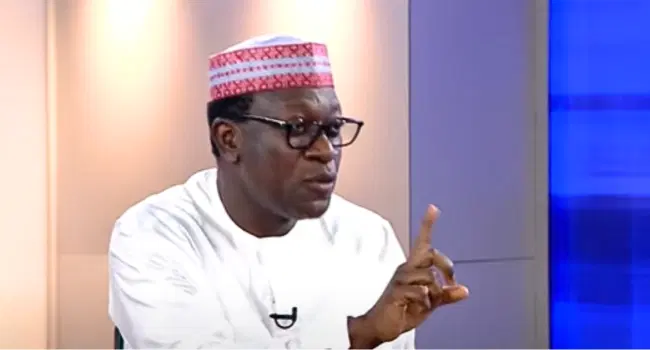
A member of the House of Representatives, Abdulmumini Jibrin, has accused New Democratic Congress (NDC) supporters of deliberately stoking political tension in Kano ahead of the 2027 general elections, following a series of confrontations involving campaign symbols in the state.
Jibrin made the allegation on Channels Television’s Politics Today on Thursday, August 21, 2026, after supporters of rival political camps reportedly burned symbols associated with President Bola Tinubu and the All Progressives Congress (APC), as well as the Kwankwansiya movement.
The controversy began after NDC supporters reportedly set fire to a cap bearing President Tinubu’s signature and the APC broom symbol. APC supporters subsequently retaliated by burning Kwankwansiya caps associated with the NDC political movement.
The incidents have added an uneasy note to the political atmosphere in Kano as parties prepare for the 2027 elections.
Jibrin, however, described the development as a calculated attempt to provoke a wider crisis before the commencement of political campaigns.
“You can see the numbers, and I said it in the speech I made there at the very place where the caps were burned. They know they are going to lose the election,” Jibrin said.
The lawmaker singled out Kano South, which he described as a crucial swing area, arguing that the NDC was aware of the electoral challenge it faced in the zone.
“They know that there is no how and there is nothing they can do on earth to win Kano South, which is usually a key swing zone in Kano,” he said.
Jibrin alleged that the timing of the incidents was significant, suggesting that the confrontation was intended to create confusion as political activity intensifies.
“So I think it’s a deliberate thing they did just a day before the commencement of campaign to start off a crisis and to create confusion. But we are not going to give room for that,” he said.
The allegations come against the backdrop of increasingly visible political realignment in Kano, where competing political movements are seeking to consolidate their support ahead of the 2027 elections.
The burning of political symbols has also highlighted the potential for seemingly symbolic acts to escalate into broader confrontations between rival supporters, particularly in a politically competitive environment.
Jibrin’s comments, however, represent his assessment of the incidents, and the allegation that NDC supporters deliberately sought to trigger unrest has not been independently established from the information available.
The development nonetheless underscores the importance of restraint among political actors as campaigns gather momentum.
With Kano expected to remain one of the country’s key electoral battlegrounds, inflammatory rhetoric or confrontations between supporters could carry wider consequences for the conduct of the 2027 elections.
For political parties and their supporters, the immediate challenge will be to channel competition through legitimate campaigning rather than actions capable of deepening tensions on the streets.




 news1 year ago
 politics1 year ago
 entertainment2 years ago
 entertainment2 years ago
 politics2 years ago
 politics1 year ago
 events2 years ago
 events2 years ago