Connect with us

news

Ajaero Insists NLC Can Negotiate Alone in Labour Dispute

Published

on

NLC

Joe Ajaero insists the NLC can negotiate alone, challenging the TUC’s position amid a dispute over workers’ N70,000 transport allowance

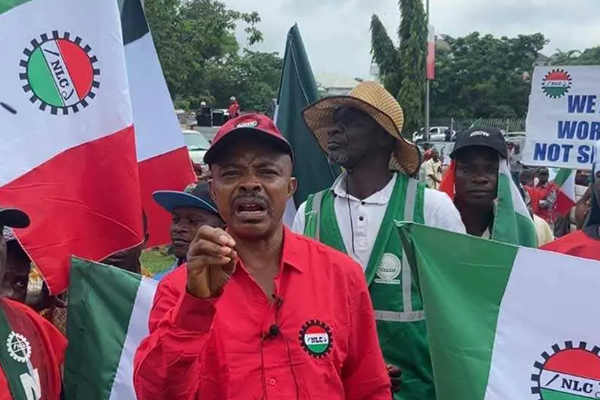
The President of the Nigeria Labour Congress (NLC), Joe Ajaero, has insisted that the labour centre has the authority to negotiate independently on workers’ welfare matters, rejecting a position by his Trade Union Congress (TUC) counterpart, Festus Osifo, that both organisations must participate in such negotiations.

Also read: Tinubu Celebrates Sultan’s 20 Years on Sokoto Throne

Ajaero said the TUC could take part in negotiations alongside the NLC but could not independently engage labour authorities on workers’ issues.

Advertisement

He based his position on what he described as the International Labour Organisation’s principle of recognising the majority representation of workers.

The NLC president made the remarks on Monday during an appearance on Channels Television’s ‘The Morning Brief’, amid a disagreement between the two labour centres over the Federal Government’s N70,000 transport allowance approved for workers across all levels for six months.

“TUC can negotiate along with NLC but NLC can negotiate alone based on the principle of most workers representatives of the ILO,” Ajaero said.

Advertisement

He further argued that the TUC was expected to submit its proposals through the NLC when dealing with the International Labour Organisation.

According to Ajaero, the TUC had previously submitted its negotiation proposals independently ahead of an ILO conference, but the submission was returned for onward processing through the NLC.

“They have to send their list here for me to forward it; that is the position of the ILO. NLC determines how TUC participates,” he said.

Advertisement

Ajaero maintained that the Ministry of Labour and other government labour authorities would not independently negotiate workers’ welfare matters with the TUC.

“TUC can’t negotiate alone; if they are saying and it is implied, it does not happen. I don’t think the Ministry of Labour or the Labour Authority will allow that to happen,” he added.

Addressing Osifo’s argument that the TUC represents a significant number of workers in the federal civil service, Ajaero referred to the Trade Union Amendment Act 2005 and Section 40 of the 1999 Constitution, which he said protect workers’ freedom to choose their unions.

Advertisement

He argued that trade union membership was voluntary and that individual workers had the right to decide which labour organisation they wished to join.

“The 2005 Trade Union Amendment Act made membership of trade unions voluntary,” he said.

Ajaero also cited Section 40 of the Constitution, arguing that it guarantees Nigerians the right to belong to associations and unions of their choice.

Advertisement

The NLC president further challenged the TUC’s claim about its level of representation in the Joint National Public Service Negotiating Council.

He said only one of the eight union bodies within the joint council was affiliated with the TUC, while the remaining seven belonged to the NLC.

He also claimed that the TUC-affiliated union had subjected its powers to the joint council.

Advertisement

Explaining the circumstances surrounding the N70,000 transport allowance, Ajaero said the agreement followed pressure from the NLC after it issued an ultimatum to the Federal Government.

He disclosed that the government requested four days to meet with labour leaders, after which discussions resumed and the transport allowance was agreed upon.

“We gave government an ultimatum; we were supposed to start an action. The government asked for four days and to meet with us, and we met, and they resumed sitting after four days,” he said.

Advertisement

“After the meeting, the 70k allowance came up.”

Ajaero also maintained that negotiations over the national minimum wage required the government to establish a negotiation committee before formal demands could be presented.

Also read: Tinubu Celebrates Sultan’s 20 Years on Sokoto Throne

He said wage-related decisions required consultations involving labour representatives, government officials and employers, underscoring the need for structured negotiations between the parties.

Advertisement

Continue Reading
Advertisement
Click to comment

Leave a Reply

Your email address will not be published. Required fields are marked *

news

Tinubu Celebrates Sultan’s 20 Years on Sokoto Throne

Published

on

Sultan

Tinubu celebrates the Sultan of Sokoto’s 20th anniversary on the throne, praising his role in promoting religious harmony and national unity

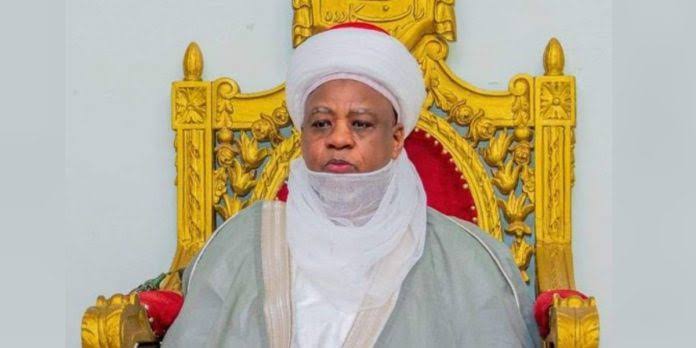
President Bola Tinubu has congratulated the Sultan of Sokoto, Alhaji Muhammad Sa’ad Abubakar III, on the 20th anniversary of his ascension to the throne, praising his contributions to religious harmony, peacebuilding and national development.

Also read: NDLEA Intercepts Major Consignments of Illicit Drugs in Seven States

In a congratulatory letter personally signed on Monday, November 2, 2026, the President described the Sultan as a moral authority, a voice of moderation and a trusted counsellor to Nigerian leaders across generations.

Advertisement

Tinubu said the monarch’s two decades on the throne had strengthened the institution of the Sokoto Caliphate, while extending its influence as a platform for peace, unity and development.

“You have been more than a traditional ruler. You have been a moral authority, a bridge between faiths, a voice of moderation and a steady counsellor to leaders across the country,” the President wrote.

He particularly commended the Sultan’s leadership as President-General of the Nigerian Supreme Council for Islamic Affairs and Co-Chairman of the Nigeria Inter-Religious Council, noting his efforts to promote understanding between Christians and Muslims.

Advertisement

According to Tinubu, the monarch has consistently advocated religious tolerance and cooperation, helping to make Nigeria’s religious diversity a source of strength rather than division.

The President also acknowledged the Sultan’s contributions to peacebuilding in northern Nigeria and the wider Sahel region, as well as his advocacy for girl-child education, support for farmers and interventions on behalf of vulnerable members of society.

Tinubu, who described his relationship with the Sultan as valuable, said he appreciated the monarch’s spiritual and political counsel, which he characterised as honest and guided by the national interest.

Advertisement

“Your counsel has been honest, patriotic and always in Nigeria’s best interest. Thank you for your support and your prayers for our nation,” he added.

The President prayed for the Sultan’s continued good health, long life and wisdom, expressing hope that his reign would continue to promote peace in Sokoto and unity across Nigeria.

Muhammad Sa’ad Abubakar III ascended the throne on November 2, 2006, becoming the 20th Sultan of Sokoto following the death of his predecessor, Sultan Muhammadu Maccido.

Advertisement

Maccido died in the ADC Airlines Flight 053 crash on October 29, 2006, near Nnamdi Azikiwe International Airport, Abuja. The crash claimed 96 of the 105 people on board.

Before becoming Sultan, Abubakar served in the Nigerian Army, having been commissioned in 1974 after graduating from the Nigerian Defence Academy in Kaduna.

His military career included command and staff appointments in Nigeria and service on United Nations peacekeeping missions abroad.

Advertisement

He retired in December 2006 with the rank of Brigadier-General.

Over his 20-year reign, the Sultan has been involved in peace advocacy relating to communal conflicts, farmer-herder tensions, the Boko Haram insurgency and religious disputes across parts of the country.

As head of the Nigerian Supreme Council for Islamic Affairs, he occupies a prominent position in the country’s Islamic leadership.

Advertisement

He also serves as Co-Chairman of the Nigeria Inter-Religious Council, which provides a platform for dialogue between Christian and Muslim leaders.

His advocacy has also included promoting access to education for girls, particularly in communities where cultural and social barriers have historically limited opportunities for them.

The Sokoto Caliphate was established in 1804 by Islamic scholar and reformer Sheikh Usman dan Fodio.

Advertisement

Also read: NDLEA Intercepts Major Consignments of Illicit Drugs in Seven States

The Sultanate remains one of Nigeria’s most prominent traditional and religious institutions, with the Sultan serving as an influential figure among Muslims across the country.

Advertisement
Continue Reading

Trending