Connect with us

Opinion

Oyo 2027: Securing Makinde’s Legacy – Why Odidi Omo is the Ideal Successor

Published

on

Oyo

“An accomplished, cerebral, charismatic, and popular party man, (Odidi Omo) is already being touted as Governor Makinde’s safest bet because he ticks all the boxes of a veritable, reliable, and trustworthy successor.”

By Tayo Williams

Advertisement

The Nigerian political field is a graveyard of godfathers clobbered to untimely political death by the godsons they helped into power.

Also read: FG to Challenge High Court Media Safety Order

Nigerians are still watching in open-mouthed bewilderment the messy soap opera unfolding in Rivers State, involving former Governor Nyesom Wike and his political godson, the incumbent Governor Siminalayi Fubara.

Wike, the current Minister of the Federal Capital Territory, anointed, piggybacked, and bankrolled Fubara to the governorship seat.

Advertisement

By every standard, Fubara was a neophyte and a Lilliputian in Rivers State politics, but he had Wike, who was blinded by the former’s tame outlook and went all out to install him as governor in 2023.

Less than six months into his stewardship, Fubara turned against Wike and would have run him aground but for providence and political sagacity. The drama is still unfolding.

Similarly, Sullivan Chime was the unassuming childhood friend of former Governor Chimaroke Nnamani of Enugu State (1999 – 2007).

Advertisement

From serving as Special Adviser, Nnamani elevated his apolitical, moderately successful friend to the position of Attorney General and Commissioner for Justice.

For friendship, not logical political consideration, Chime was favoured by his boss as successor in 2007.

Within months of becoming governor, Chime turned on his godfather and made him a persona non grata in the same state where the latter had governed for eight years.

Advertisement

The same situation repeated itself in Cross River State, where then-Governor Donald Duke supported his friend, Liyel Imoke, in his bid to succeed him in 2007. Many years after they had both left office, they remain sworn enemies.

We have not forgotten so soon that, without any political structure or understanding of the political terrain, Godwin Obaseki, then an aide of former Governor Adams Oshiomhole, was also piggy-backed to the government house by his principal, who swore by everything he held sacred that Obaseki would take the state beyond where he had. If only he knew; Obaseki and Oshiomhole’s acrimonious fallout is one for the books.

The list of such godfather-godson/incumbent-anointed successor relationships gone awry is endless. And the reason may not be far-fetched.

Advertisement

Many godfathers find it easy to tempt fate because public office is a bubble that makes them feel immune to disaster or failure.

They gleefully succumb to hubris, convinced that they’re smarter, more powerful, and more knowledgeable than everyone else and therefore make ill-informed decisions about their successor.

Sadly, many governors are terrible students of history and tend to repeat the same mistakes of those before them.

Advertisement

At the moment, Governor Seyi Makinde is at that intersection of feverish brainstorming and vast consultation that incumbents reach in trying to anoint a successor.

He knows that backing the wrong horse will spell doom for him, his legacy, and his political future. Thus, ending up like his estranged friend, Wike.

However, Governor Makinde is a brilliant, methodical, and measured politician who is also gifted with native intelligence and great acuity.

Advertisement

This is the time to put those gifts into use as 2027 is around the corner, and the ruling All Progressives Congress is waiting eagerly on the wings with its rampaging federal might and machinery.

The People’s Democratic Party in Oyo State is not short of credible, competent, and qualified candidates for the governorship seat in 2027.

They all come with robust bona fides and are earnestly seeking the good graces of the governor, which makes it all the more difficult to anoint one person.

Advertisement

However, by pandering to the choice of an obsequious and potentially treacherous party man who will not help to sustain or safeguard his political future, Governor Makinde will be repeating unsavoury history.

May he not come to such a sorry pass, where his successful eight-year governorship will be defined by supporting a wrong and unpopular candidate.

What Governor Makinde needs is a loyal, trusted, progressive, humane, and God-fearing person who will be a centripetal force for party members and will continue and consolidate his achievements and policies in Oyo State for the good of all.

Advertisement

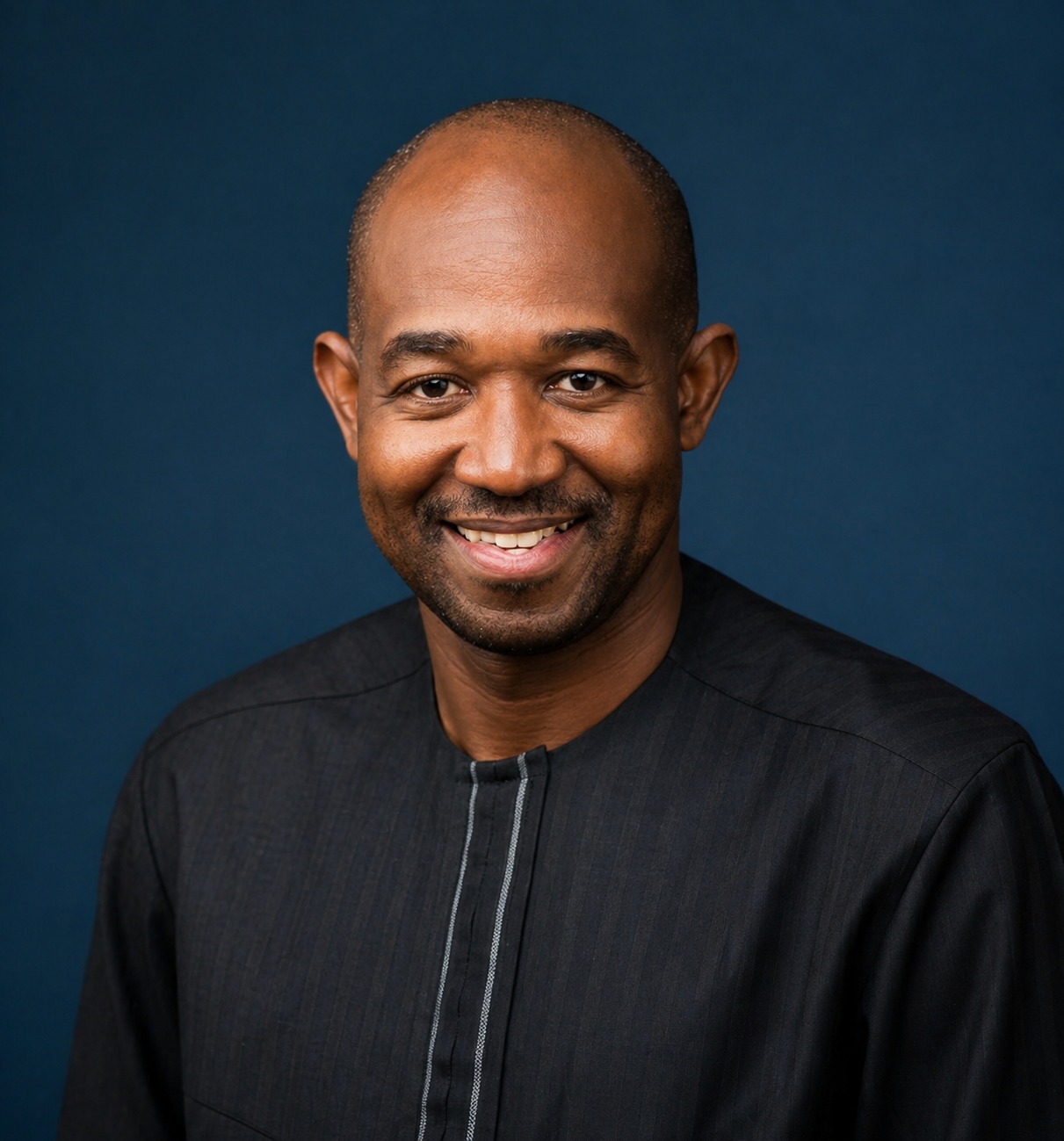
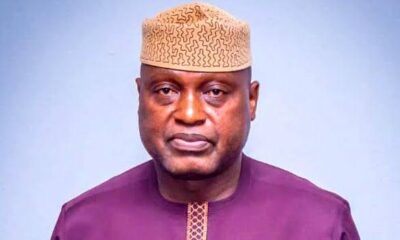
Across the length and breadth of the state, one name that is being echoed loudly is Hon. Adedeji Dhikrullah Stanley Olajide, the member representing Ibadan North West/South West in the House of Representatives since 2019.

Popularly known as ‘Odidi Omo’ (some have even changed it to Odidi Oyo), Hon. Olajide is the Chairman of the House Committee on Digital, Information, and Communication Technology.

An accomplished, cerebral, charismatic, and popular party man, he is already being touted as Governor Makinde’s safest bet because he ticks all the boxes of a veritable, reliable, and trustworthy successor.

Advertisement

Deeply intelligent and deliberate, accessible and affable, Hon. Olajide is variously described as a dependable friend who would sail all day and night in search of a friend who got lost at sea.

A devout Muslim, he offers Governor Makinde a successor who is tech-savvy, has a wealth of legislative experience, invaluable global exposure, and broad grassroots appeal; an accretion of qualities that positions him as a capable steward for Oyo State’s future and a reliable pathway to legacy preservation.

Without any scintilla of doubt, the thoroughbred American-trained ICT professional, philanthropist, and irrepressible grassroots mobiliser is the man who will build on his successor’s Roadmap for Accelerated Development, ensuring initiatives in education, agriculture, and infrastructure continue without disruption.

Advertisement

Any wilful deviation from the honourable path that the candidacy of Odidi Omo presents for Governor Makinde will be a recipe for disaster that will echo through the ages.

Also read: FG to Challenge High Court Media Safety Order

May God help Governor Makinde get it right.

Advertisement
Continue Reading
Advertisement
Click to comment

Leave a Reply

Your email address will not be published. Required fields are marked *

Opinion

Seven prime ministers in a decade: What Nigeria can learn from Britain’s chaos

Published

on

Prime Minister

By Dr Toju Ogbe,

The resignation of British Prime Minister Keir Starmer, less than two years after leading the Labour Party to  a landslide electoral victory, was dramatic, yet reflected a pattern we have become familiar with in recent British politics.

Advertisement

Also read: Abolish state of origin: A prerequisite for true national integration

Starmer now joins a procession of fallen prime ministers stretching back to 2016 – from David Cameron to Theresa May, Boris Johnson, Liz Truss, and Rishi Sunak.

None of these prime ministers was ousted through military intervention, popular insurrection, or a court order. Rather, each was ultimately brought down by the same political system that elevated them to electoral glory.

To the casual observer, the rapid turnover of British Prime Ministers in the last decade may appear chaotic, or even a symptom of political instability. Some argue that the British electorate has become ungovernable.

Advertisement

However, beneath the apparent chaos at Westminster lies an uncomfortable truth that African democracies would do well to examine, particularly Nigerians who wonder why our democracy has delivered so little despite almost three decades of uninterrupted civilian rule.

The turbulence of British politics over the last decade, presents an important lesson on democratic accountability beyond successful elections.

Once the prime minister is deemed a liability by their own political party, the mechanics of accountability are activated. The daggers are quietly drawn and the ruthless pressure to resign begins.

Advertisement

Every poll and survey on public opinion is closely monitored, local election results are taken as a referendum on leadership. Cabinet resignations begin to gain momentum and backbenchers get restless.

Once the news media smells an internal uprising, they amplify scrutiny of the prime minister, subjecting every move – speech, public appearance, political misstep etc to relentless examination.

Pressure gradually mounts until the prospect of bitter internal leadership challenge becomes impossible to resist. The Prime Minister falls.

Advertisement

For every British Prime Minister, winning an election is merely the beginning of examination, not the end. Political survival lasts only for as long as the prime minister maintains the confidence of his party and the parliament.

This is the muscle of British democratic accountability; a political culture that prioritises institutional survival over individual ambition. Starmer recognised this reality in his resignation speech:

“The question my party is asking now is whether I am best placed to lead us into the next general election. I have heard the answer of my parliamentary party to that question, and I accept that answer with good grace.”

Advertisement

That closing sentence alone is a masterclass in British institutional democracy. The party spoke. The leader listened. The correction comes from within.


Nigeria presents a strikingly different political logic.

Advertisement

Nigeria on the other hand, presents an interesting contrast with a different political logic and culture.

The notion that a governing party would overtly interrogate the performance of its own leader and engineer a transition to someone better equipped to maintain public confidence, is in most cases politically unthinkable in Nigeria.

Political parties in Nigeria do not coalesce  around ideological principles; rather, they operate more as electoral instruments organised around powerful individuals.

Advertisement

Internal dissent is often dealt with as betrayals rather than as part of healthy democratic engagement. Godfatherism and transactional loyalties shape political succession and leadership retention.

Once elected in Nigeria, there is an inherent assumption that a governor or president has a fixed two-term lease on power.

While 10 Downing Street is preparing to welcome its seventh Prime Minister in a decade, Nigeria, in contrast, has had only two democratically elected presidents during the same period – one of whom is still serving.

Advertisement

Social and economic conditions may deteriorate. Insecurity may worsen. Campaign promises may be ignored.

Public frustrations may become unbearable. Yet, incumbent governors and presidents often remain insulated from meaningful internal scrutiny and are even routinely anointed as ‘consensus’ candidate for second terms provided loyalties to godfathers, rather than the electorates are maintained.

The consequence is that loyalty, instead of performance is often rewarded at the expense of accountability.

Advertisement

This is not an argument for a revolving door at Aso Rock, as frequent leadership changes, by themselves, do not guarantee good governance.

Rather it is a case for making accountability an integral aspect of party politics in Nigeria.

Although the Nigerian presidential system provides for a fixed four-year term regardless of party confidence, political parties should however, be more than instruments for election campaigns, activated to simply retain or take over power every four years.

Advertisement

Electoral victory, should not be the ultimate goal, but the starting point of public service where democratic legitimacy must be continuously earned.

Equally important, political parties must develop the institutional maturity to honestly evaluate their own leaders. They must prioritise public interest and institutional credibility over loyalty to ‘Godfathers’.

The ultimate lesson from Westminster’s revolving door is clear: the true strength of a democratic system, lies not in the ability to produce leaders, but the capacity to effectively replace them, when they no longer command confidence.

Advertisement

Protecting failing leaders from accountability weakens democracy and political parties must ensure that no leader is more powerful than the institution.

Also read: Madugu Targets Strong WAFCON Title Defence for Super Falcons

As political parties gear up for the 2027 general elections, the political class must decide what matters more: we can continue to reward blind loyalty and endure predictable decline, or discover the courage to demand accountability from those who seek to lead us.

Advertisement
Continue Reading

Trending