Spain train crash kills 64 and injures 80 after two high-speed trains collide near Urda, triggering a major rescue operation and emergency response
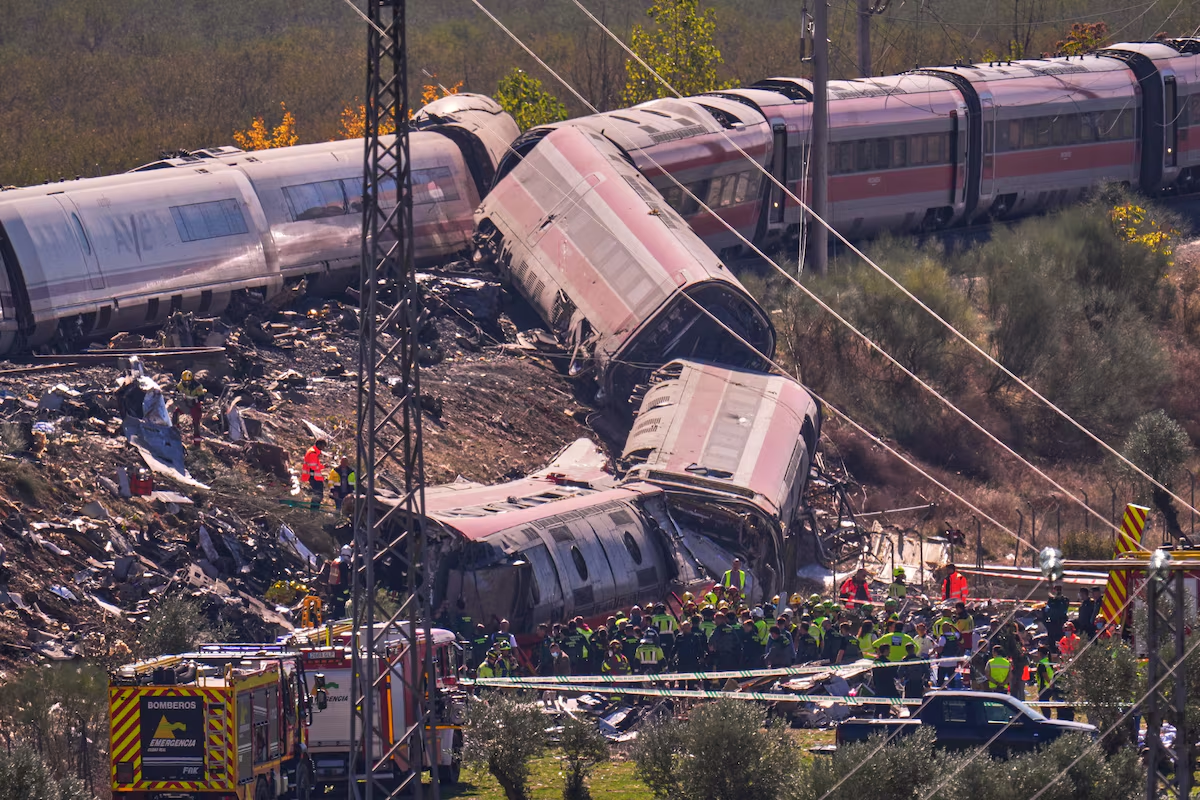
At least 64 people have been killed and 80 others injured after two high-speed trains collided near Urda, south of Madrid, in one of Spain’s deadliest railway disasters in more than a decade.
The Castilla-La Mancha regional government confirmed the death toll as emergency services continued rescue operations at the scene.
More than 500 passengers were reportedly travelling on the two trains involved in the collision.
According to reports, the trains included a Renfe high-speed service and an Iryo train operating on the Madrid-to-Seville route.
Images analysed by the BBC showed parts of the Renfe train leaving the tracks, while carriages of the Iryo service also derailed.
The cause of the collision had not been officially established at the time of reporting.
However, Spanish media cited preliminary accounts suggesting that the Renfe train struck the Iryo service, which may have been stationary following a problem on the tracks.
The scale of the disaster prompted a major emergency response involving ambulances, helicopters, rescue workers and police officers.
Regional officials said 80 people had been injured, with around 50 reportedly in serious condition and 15 in critical condition.
Several victims were taken to hospitals in nearby areas, while others were transported to Madrid for treatment. Hospitals in Toledo, Ciudad Real and Alcázar de San Juan reportedly suspended planned surgeries to accommodate casualties from the crash.
Blood transfusion centres in Madrid and Toledo also appealed for urgent donations amid concerns about increased demand for blood supplies.
Passengers who survived the collision described violent impacts, damaged carriages and injured travellers trapped amid the wreckage.
One passenger, Sebastián Herrero, told Spanish newspaper El Mundo that a powerful impact threw him into the seats ahead of him.
He said some injured passengers had broken noses and arms, while smoke spread through the train carriages.
Another passenger, identified as Iñaki, told El País that the impact sent him rolling across the floor. After escaping, he said he saw injured people and bodies around the wreckage.
BBC Verify also examined images and videos that appeared to show a section of railway track piercing a Renfe carriage, with approximately 10 metres of rail protruding through its roof.
The collision has renewed concerns about railway safety in Spain, which has experienced other deadly train accidents.
A previous high-speed rail accident near Córdoba reportedly killed 46 people, while the country’s worst railway disaster in recent decades occurred in July 2013, when 80 people died in a derailment near Santiago de Compostela.
Spain’s Prime Minister, Pedro Sánchez, said he was shocked by the latest disaster and remained in contact with the transport minister.
The Spanish royal family also expressed condolences to the victims’ relatives and praised emergency personnel responding to the incident.
Meanwhile, the Royal Spanish Football Federation postponed 24 Copa del Rey matches in solidarity with the victims, while several political parties suspended campaign activities.
Rescue and recovery operations continued as authorities worked to establish the circumstances surrounding the collision and assess the full extent of the tragedy.




 news1 year ago

 politics1 year ago

 entertainment2 years ago

 entertainment2 years ago

 politics2 years ago

 politics1 year ago

 events2 years ago

 events2 years ago