Connect with us

Opinion

Why Nigeria Needs Rotary’s Peace Summit

Published

on

Rotary

Rotary Peace Summit brings Nigerian leaders and peacebuilding experts together in Lagos to explore justice, good governance and lasting peace

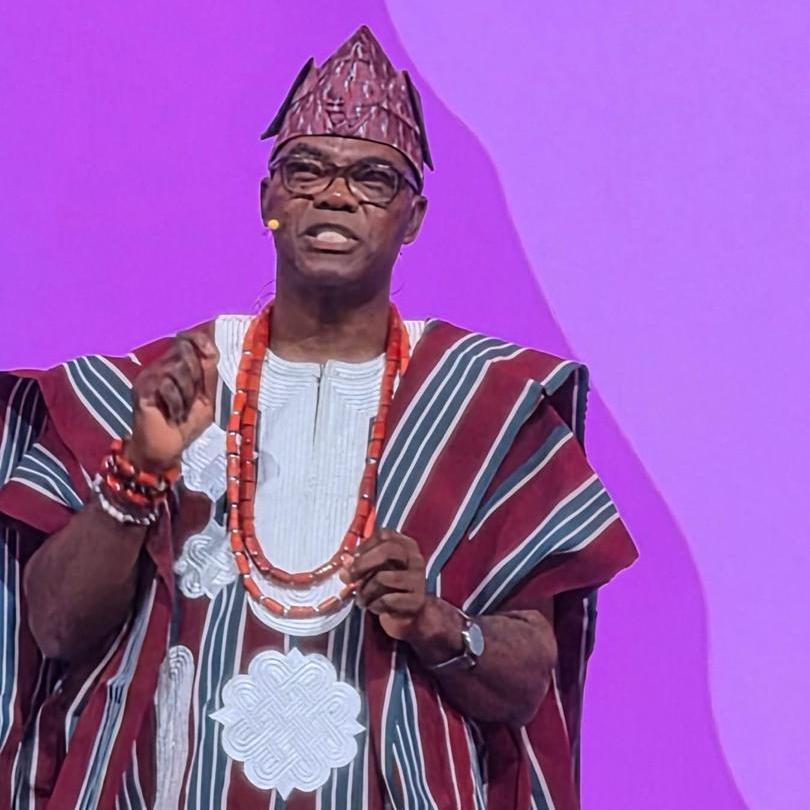
The All-Nigeria Rotary Peace Summit, convened by Rotary International President Olayinka Hakeem Babalola, is scheduled to take place in Ikeja, Lagos, on Saturday, 7 November 2026, bringing together peacebuilding experts, policymakers, security professionals, academics and civil society leaders to examine how good governance, justice and equity can help address Nigeria’s persistent insecurity and social divisions.

Advertisement

Also read: CBN Strengthens Oil Export Checks With 8 Agents

The gathering comes at a critical time for the country, as insurgency, banditry, kidnapping, communal violence and economic hardship continue to place pressure on communities and public institutions.

Under the theme, “Good Governance, Justice and Equity: Foundations for Sustainable Peace”, the summit aims to move discussions beyond the conventional understanding of peace as simply the absence of violence.

Its central message is that lasting peace requires institutions that command public confidence, fair access to opportunities, accountable leadership and a justice system that serves citizens without discrimination.

Advertisement

The summit will hold at the Victoria Garden Event Centre, Alausa, Ikeja, with a programme designed to encourage collaboration among government representatives, traditional institutions, security agencies, business leaders, religious organisations and development practitioners.

The event’s sub-theme, “From Dialogue to Action: Forging a Sustainable Peace Legacy in Nigeria”, reflects the organisers’ intention to secure practical recommendations, stronger partnerships and commitments that can continue beyond the gathering.

Babalola, who assumed office as Rotary International President on 1 July 2026 for the 2026-27 Rotary year, has identified peacebuilding and community-led development as important priorities of his leadership.

Advertisement

In an earlier statement published by Rotary International, Babalola said: “At a time when many societies face division and uncertainty, I believe Rotary has an important role to play in building understanding, advancing peace, and creating opportunities for communities to thrive.”

The Lagos gathering will feature a keynote address by Lea Perekrests, Director of Partnerships at the Institute for Economics and Peace (IEP).

Her presentation will examine global perspectives on the relationship between governance, justice, equity and sustainable peace, drawing on the institute’s research into the conditions that enable peaceful societies to develop.

Advertisement

The programme will also include two panel discussions addressing governance, justice, national cohesion, security and inclusion.

The discussions are expected to explore the roles of women, young people, vulnerable communities and civil society organisations in preventing conflict and strengthening social cohesion.

Among the participants expected are security specialists, academics, humanitarian advocates and representatives of non-governmental organisations.

Advertisement

The programme will also feature goodwill messages from youth organisations, women’s groups, security institutions and the diplomatic community.

A stakeholder session will focus on translating the discussions into practical commitments.

The organisers have also outlined plans for the signing of a Peace Legacy Accord and Agenda, alongside a summit declaration and communiqué setting out agreed priorities and proposed next steps.

Advertisement

The emphasis on implementation is particularly important in Nigeria, where numerous conferences and policy discussions have identified the country’s security and development challenges, but translating recommendations into sustained institutional action remains a persistent difficulty.

Nigeria’s need for a broader approach to peacebuilding is reinforced by the findings of the Institute for Economics and Peace’s 2026 Global Peace Index.

The index recorded a 12th consecutive year of declining global peacefulness, with 61 active state-based conflicts, the highest number since the end of the Second World War.

Advertisement

More than 181,000 conflict-related deaths were recorded in 2024.

Nigeria ranked 142nd among 163 countries in the 2026 index, placing the country among those facing significant peace and security challenges.

The index assesses countries through 23 indicators covering societal safety and security, ongoing domestic and international conflicts, and militarisation.

Advertisement

The figures offer an important context for the Lagos summit.

They suggest that improving security requires more than responding to individual incidents of violence.

It also involves addressing the conditions that make communities vulnerable to conflict and weaken confidence in public institutions.

Advertisement

The economic implications are equally significant.

Persistent insecurity can disrupt agricultural production, discourage investment, restrict trade and increase the cost of doing business.

Public resources that could otherwise support schools, hospitals, transport infrastructure and employment programmes may also be diverted towards emergency security operations and humanitarian interventions.

Advertisement

For families in affected communities, the consequences are even more immediate.

Displacement, interrupted education, lost livelihoods and the disruption of everyday economic activities can leave lasting damage long after violence subsides.

Rotary’s involvement in peacebuilding provides another dimension to the proposed intervention.

Advertisement

Peace is one of the organisation’s established areas of focus, supported through community initiatives, educational programmes and professional development opportunities.

The Rotary Peace Centres programme, for example, provides specialised training for people working in peace and development. Since its establishment in 2002, the programme has trained more than 1,900 fellows working across more than 140 countries.

The organisation’s approach recognises that peacebuilding requires people with the knowledge and practical skills to manage disagreements, facilitate dialogue and support communities recovering from conflict.

Advertisement

In Nigeria, Rotary’s network of clubs and professional volunteers offers opportunities to complement the work of public institutions through community engagement, partnerships and locally driven initiatives.

However, the success of such efforts will depend on whether the summit can establish a clear distinction between recommendations and commitments that can be implemented.

Government agencies must remain responsible for security, justice and public service delivery, while civil society, traditional institutions, religious organisations and the private sector can contribute to prevention, mediation and social development.

Advertisement

The proposed Peace Legacy Accord and summit communiqué will therefore be important measures of the gathering’s ambitions.

Their value will depend on whether the documents identify responsible institutions, realistic timelines and measurable indicators for assessing progress.

The inclusion of women and young people in the discussions is also significant.

Advertisement

Communities most affected by insecurity should have a meaningful role in shaping the interventions intended to protect them.

Women, youth organisations and local civil society groups often possess valuable knowledge of community tensions, social vulnerabilities and opportunities for reconciliation.

The media also has a responsibility to support a more constructive public conversation.

Advertisement

Accurate reporting, responsible treatment of sensitive ethnic and religious issues, and resistance to misinformation can help prevent the escalation of tensions.

Ultimately, the All-Nigeria Rotary Peace Summit offers an opportunity to bring these different responsibilities into a common national conversation.

Its importance will not be determined by the number of prominent participants or the strength of its declarations, but by the willingness of stakeholders to translate shared concerns into sustained action.

Advertisement

Nigeria needs peace as a practical condition for national development, not simply as a slogan repeated at public gatherings.

Good governance, equal citizenship, access to justice and inclusive economic opportunities are essential to creating a society in which differences can be managed without violence.

As delegates gather in Lagos on 7 November, the challenge will be to ensure that the conversation produces a lasting framework for cooperation and accountability.

Advertisement

Also read: CBN Strengthens Oil Export Checks With 8 Agents

Peace cannot be secured through force alone, nor can it survive where injustice and exclusion remain unaddressed. It requires responsible leadership, credible institutions and citizens willing to recognise their shared stake in the country’s future.

Advertisement
Continue Reading
Advertisement
Click to comment

Leave a Reply

Your email address will not be published. Required fields are marked *

Opinion

Parliamentary oversight or coordinated smear? The unprocedural attack on NNPCL’s Dr. Mumuni Dagazau

Published

on

Parliamentary

Also read: Iheanacho Extends Scoring Run in Bursaspor Win

This provision empowers each chamber of the National Assembly to order investigations into any matter within its legislative competence, as well as the conduct of any person, authority, ministry, or government department entrusted with executing laws or administering public funds.

Furthermore, Section 62 provides the explicit constitutional foundation for establishing specialized committees, most notably the Committee on Public Petitions, to systematically receive, review, and investigate genuine citizen grievances.

Advertisement

To ensure these powers are exercised with order, discipline, and fairness, the legislature operates under clear Standing Orders formulated pursuant to Sections 60 and 101 of the Constitution.

While derived broadly from the investigative powers in Sections 88 and 128, the specific mechanisms, rules, and mandatory steps for receiving, vetting, hearing, and acting upon public petitions are meticulously detailed within these Standing Orders.

Having established this statutory background, it is essential to emphasize a fundamental principle: the constitutional mandate to receive and investigate petitions is an instrument of public accountability, not a weapon for personal vendettas, political witch-hunts, or legislative leverage.

Advertisement

It is within this context that the recent actions of the House of Representatives Committee on Petroleum Resources (Downstream) must be critically examined.

Its Chairman, Hon. Ikenga Ugochinyere Imo, disclosed at the House Committee Downstream Week that his committee had received a petition alleging money laundering and abuse of office against the Executive Vice President of the Nigerian National Petroleum Company Limited, Dr. Mumuni Dagazau.

A rigorous examination of this public disclosure reveals a glaring departure from standard parliamentary practice.

Advertisement

This entire affair bears all the hallmarks of a orchestrated campaign driven by deep-seated malice; a desperate attempt to smear the character of public officers who have steadfastly refused to cow to covert blackmail or compromise their official responsibilities.

If this petition possesses any legitimate substance, why did the Committee Chairman fail to reveal the identity of the petitioner? Going public with an unverified, anonymous document without first conducting a preliminary administrative inquiry, establishing a prima facie case, or according Dr. Dagazau his fundamental constitutional right to a fair hearing is deeply troubling.

By disclosing to the press with unbacked claims, the committee has bypassed established legislative protocol and effectively subjected an officer to a trial by media.

Advertisement

In doing so, the committee risks allowing itself to be used as a proxy for disgruntled elements seeking to undermine ongoing reforms in Nigeria’s downstream petroleum sector.

These interested parties appear unable to accept that the NNPC Limited of today operates under an entirely different paradigm from the NNPC Limited of the past. Under the Petroleum Industry Act (PIA), NNPC Limited is driven by financial prudence, corporate accountability, and strict integrity.

The days when public institutions could be coerced into handing out unearned benefits are over. Those who believe they can resort to character assassination to extract personal gain or force compliance will find that their blackmail falls on deaf ears.

Advertisement

Furthermore, the backdrop against which these remarks were made renders the Chairman’s comment even more disappointing.

At a major legislative gathering such as the “House Committee Downstream Week” a platform designed specifically to evaluate the health, security, and growth of Nigeria’s energy sector; the clear expectation of stakeholders, industry experts, and the general public was a forward-looking, substantive engagement.

National interest demanded that the committee focus its spotlight on critical industry dynamics: tracking progress made in local refining capacity, addressing persistent supply and bottlenecks, tackling crude oil theft, and formulating actionable legislative solutions to lower energy costs for everyday Nigerians.

Advertisement

Instead of seizing this vital platform to offer strategic direction and policy support, Hon. Ugochinyere Ikenga chose to reduce a high-level public gathering to a arena for personal attacks and unverified slurs against an executive officer.

Diverting public focus away from pressingly urgent structural challenges in the downstream sector to launch an unprovoked, uninvestigated attack on Dr. Mumuni Dagazau represents a severe misplacement of priorities.

It undermines the very essence of parliamentary responsibility, substituting constructive legislative leadership with sensationalism and targeted distraction at a time when the nation desperately needs solutions, not political theater.

Advertisement

While Dr. Dagazau reserves all legal rights to protect his hard-earned reputation against defamatory attacks and coordinated character assassination, the leadership of the House of Representatives should be urged to step in.

Also read: Iheanacho Extends Scoring Run in Bursaspor Win

The National Assembly must protect the dignity of the parliament by ensuring that committee oversight remains grounded in fairness, thoroughness, and due process, rather than public spectacles driven by unverified petitions.

Advertisement
Continue Reading

Trending