Connect with us

Opinion

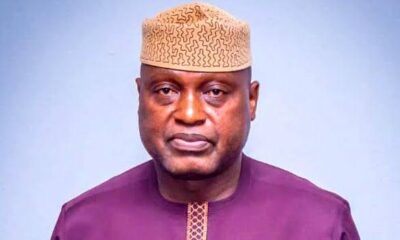
Unbroken Conviction: Senator Husain and the Test of Loyalty in Nigerian Politics

Published

on

Nigerian Politics

Miftau Adebowale

Mudashiru Husain marks 70 with loyal reflection, embodying steadfast values, conviction, and loyalty in Nigeria’s progressive politics

Advertisement

Chronicle II reflecting Husain’s doctrine of loyalty and reflection as he turns 70.

Also read: From Ejigbo to the National Stage: The Humble Rise of a Reluctant Politician

In the ever-shifting and volatile tides of Nigerian politics where alliances are easily fleeting and convictions are often traded for convenience, Senator Mudashiru Oyetunde Husain stands out as one of the few men whose loyalty has never been swayable.

For more than three decades, Husain’s political compass has remained firmly fixed toward a unidirectional leaning – the progressive family anchored by Asiwaju Bola Ahmed Tinubu, Nigeria’s President and political pathfinder of the Fourth Republic.

Advertisement

To Husain, loyalty is not a strategy; it is a creed, a covenant, and a defining character that must be upheld at all times.

Loyalty as a Political Value

Those who have followed his sojourn from his days in Lagos politics to his time as Senator representing Osun West (2011–2015), usually describe him as “the quiet loyalist.” He has never been known for loud declarations, yet his actions consistently speak volumes.

Advertisement

When others flinch in the face of political storms, Husain stands still. This is not because he is unnecessarily obstinate, but because he believes loyalty must be rooted in unwavering conviction, not convenience.

“A man who cannot stay true to his political heritage cannot stay true to the people he serves.”
— Sen. Mudashiru Husain

The above popular corollary imply that Husain’s loyalty has never been blind. It is informed, measured, and bound by shared values.

Advertisement

His relationship with Asiwaju Bola Tinubu dates back to the early formative years of Nigeria’s modern progressive movement, when both men were building the political structures that would later shape modern democratic governance in the Southwest.

To this day, Husain often speaks of Asiwaju not merely as a leader but as a decisive mentor whose clarity of vision, compassion, and tenacity have inspired generations of politicians.

The Osun’s Storm: When Loyalty Was Tested

Advertisement

There came a time, however, when that loyalty faced its most difficult test during the turbulent years preceding and following the Osun APC internal crisis.

While factions emerged, alliances shifted, and loyalties were strained, Senator Husain never wavered.

He did not wait to see which way the wind would blow; instead, he stood with conviction, guided by what he often calls “the original compass of progressive ideology.”

Advertisement

“Husain is the true definition of loyalty in politics,” a close associate said. “He boldly lets the world know where he belongs even without regrets, but with courage and conviction.”

Even when standing firm came with personal and political costs, Husain refused to act against his beliefs.

He remained where he has been right from the time he was commissioned to come to Osun, upholding the principles laid down by Asiwaju Tinubu, his all-time mentor and benefactor.

Advertisement

His composure in those turbulent times revealed his rare quality of a politician who values integrity above opportunity.

The Calm in the Storm

While others sought refuge in factional advantage, Husain worked quietly behind the scenes, reaching out to estranged leaders and pleading for unity.

Advertisement

His reconciliatory efforts were tireless as well known to all top leaders. It started from reaching out, initiating dialogues, to emphasizing the need for a united Osun APC family.

Even when those efforts met resistance, he remained calm, never bitter. “Politics is not war,” he often said, “it is a vehicle for shared progress.”

When the political dust settled, Husain naturally found his way back into the mainstream progressive camp duly recognized by President Tinubu and where he thinks the interest of his benefactor can be well protected.

Advertisement

It wasn’t a return of convenience but a reaffirmation of the values he had never abandoned.

This is why, among party loyalists, he is fondly called “the Class Captain” which symbolized his composure, order, and steady leadership even when others lost their bearings.

A Legacy of Conviction at 70

Advertisement

Today, as he turns 70, Senator Mudashiru Husain’s name evokes not only respect but reassurance showing that loyalty, in its truest sense, still exists in politics.

He has shown that one can disagree without betrayal, compete without bitterness, and aspire without disloyalty.

His political journey right from Lagos to Osun and from parliament to governorship ambition remains a study in conviction.

Advertisement

A chronicle of a man who has walked through turbulence but never drifted from his values.

“In politics, storms are inevitable. But character is what steadies the ship”. These are valuable words he has been known for.

Also read: From Ejigbo to the National Stage: The Humble Rise of a Reluctant Politician

At a time when many redefine loyalty for expediency, Husain remains the exception exemplifying the unbroken link between the old progressive order and the future of Osun’s renewed hope.

Advertisement

Continue Reading
Advertisement
Click to comment

Leave a Reply

Your email address will not be published. Required fields are marked *

Opinion

Seven prime ministers in a decade: What Nigeria can learn from Britain’s chaos

Published

on

Prime Minister

By Dr Toju Ogbe,

The resignation of British Prime Minister Keir Starmer, less than two years after leading the Labour Party to  a landslide electoral victory, was dramatic, yet reflected a pattern we have become familiar with in recent British politics.

Advertisement

Also read: Abolish state of origin: A prerequisite for true national integration

Starmer now joins a procession of fallen prime ministers stretching back to 2016 – from David Cameron to Theresa May, Boris Johnson, Liz Truss, and Rishi Sunak.

None of these prime ministers was ousted through military intervention, popular insurrection, or a court order. Rather, each was ultimately brought down by the same political system that elevated them to electoral glory.

To the casual observer, the rapid turnover of British Prime Ministers in the last decade may appear chaotic, or even a symptom of political instability. Some argue that the British electorate has become ungovernable.

Advertisement

However, beneath the apparent chaos at Westminster lies an uncomfortable truth that African democracies would do well to examine, particularly Nigerians who wonder why our democracy has delivered so little despite almost three decades of uninterrupted civilian rule.

The turbulence of British politics over the last decade, presents an important lesson on democratic accountability beyond successful elections.

Once the prime minister is deemed a liability by their own political party, the mechanics of accountability are activated. The daggers are quietly drawn and the ruthless pressure to resign begins.

Advertisement

Every poll and survey on public opinion is closely monitored, local election results are taken as a referendum on leadership. Cabinet resignations begin to gain momentum and backbenchers get restless.

Once the news media smells an internal uprising, they amplify scrutiny of the prime minister, subjecting every move – speech, public appearance, political misstep etc to relentless examination.

Pressure gradually mounts until the prospect of bitter internal leadership challenge becomes impossible to resist. The Prime Minister falls.

Advertisement

For every British Prime Minister, winning an election is merely the beginning of examination, not the end. Political survival lasts only for as long as the prime minister maintains the confidence of his party and the parliament.

This is the muscle of British democratic accountability; a political culture that prioritises institutional survival over individual ambition. Starmer recognised this reality in his resignation speech:

“The question my party is asking now is whether I am best placed to lead us into the next general election. I have heard the answer of my parliamentary party to that question, and I accept that answer with good grace.”

Advertisement

That closing sentence alone is a masterclass in British institutional democracy. The party spoke. The leader listened. The correction comes from within.


Nigeria presents a strikingly different political logic.

Advertisement

Nigeria on the other hand, presents an interesting contrast with a different political logic and culture.

The notion that a governing party would overtly interrogate the performance of its own leader and engineer a transition to someone better equipped to maintain public confidence, is in most cases politically unthinkable in Nigeria.

Political parties in Nigeria do not coalesce  around ideological principles; rather, they operate more as electoral instruments organised around powerful individuals.

Advertisement

Internal dissent is often dealt with as betrayals rather than as part of healthy democratic engagement. Godfatherism and transactional loyalties shape political succession and leadership retention.

Once elected in Nigeria, there is an inherent assumption that a governor or president has a fixed two-term lease on power.

While 10 Downing Street is preparing to welcome its seventh Prime Minister in a decade, Nigeria, in contrast, has had only two democratically elected presidents during the same period – one of whom is still serving.

Advertisement

Social and economic conditions may deteriorate. Insecurity may worsen. Campaign promises may be ignored.

Public frustrations may become unbearable. Yet, incumbent governors and presidents often remain insulated from meaningful internal scrutiny and are even routinely anointed as ‘consensus’ candidate for second terms provided loyalties to godfathers, rather than the electorates are maintained.

The consequence is that loyalty, instead of performance is often rewarded at the expense of accountability.

Advertisement

This is not an argument for a revolving door at Aso Rock, as frequent leadership changes, by themselves, do not guarantee good governance.

Rather it is a case for making accountability an integral aspect of party politics in Nigeria.

Although the Nigerian presidential system provides for a fixed four-year term regardless of party confidence, political parties should however, be more than instruments for election campaigns, activated to simply retain or take over power every four years.

Advertisement

Electoral victory, should not be the ultimate goal, but the starting point of public service where democratic legitimacy must be continuously earned.

Equally important, political parties must develop the institutional maturity to honestly evaluate their own leaders. They must prioritise public interest and institutional credibility over loyalty to ‘Godfathers’.

The ultimate lesson from Westminster’s revolving door is clear: the true strength of a democratic system, lies not in the ability to produce leaders, but the capacity to effectively replace them, when they no longer command confidence.

Advertisement

Protecting failing leaders from accountability weakens democracy and political parties must ensure that no leader is more powerful than the institution.

Also read: Madugu Targets Strong WAFCON Title Defence for Super Falcons

As political parties gear up for the 2027 general elections, the political class must decide what matters more: we can continue to reward blind loyalty and endure predictable decline, or discover the courage to demand accountability from those who seek to lead us.

Advertisement
Continue Reading

Trending