Miftau Adebowale
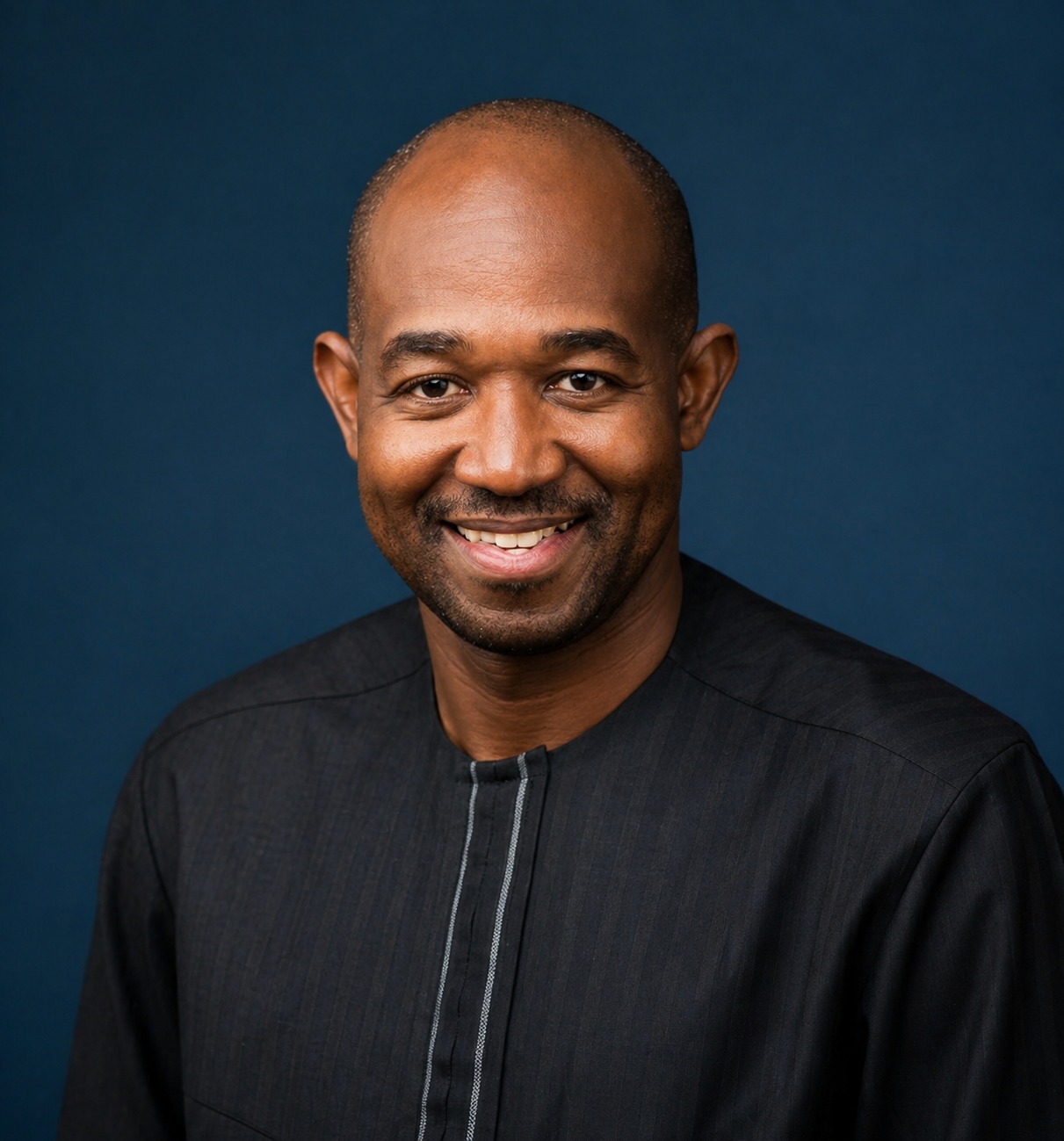
Senator Mudashiru Husain Osun 2026 bid reflects humility, loyalty, and progressive ideals shaped by decades of disciplined public service and integrity
Chronicle I reflecting on Distinguished Senator Mudashiru Husain’s lifetime of purpose, humility, and service as he turns 70.
There are men who chase power, and there are those whom power quietly finds. Senator Mudashiru Oyetunde Husain belongs to the second kind being a man whose life has been defined not by ambition, but by purpose.
From the quiet streets of Ejigbo in Osun State to the hallowed chambers of Nigeria’s National Assembly, his life trajectory exemplifies an account of discipline, faith, and service.
Born on October 25, 1955, in the ancient town of Ejigbo, Husain’s formative years were shaped by modesty, education, and a deeply moral upbringing. His early teachers would later recall him as “the boy who always listened before he spoke,” a habit that would follow him into adulthood, and into politics.
Husain, a polyglot who speaks English, French, Arabic, and Yoruba with equal fluency, depicts a rare blend of intellect and humility.
His academic sojourn through the University of Lagos, where he obtained both a Bachelor’s Degree and Diploma in French, and later the Institute of Legislative Studies, Abuja, where he bagged a Master’s degree in Legislative Studies, was that of a quiet brilliance rather than flamboyance.
The Calling of Public Service: An Inspiration from US Clinton to M.K.O Abiola
Husain’s entry into politics was never the product of personal craving. It was a natural extension of his desire to serve.
While in the United States, during the Clinton administration, he got indoctrinated with the ideals of democracy through his active involvement in the Democratic Party.
Those years abroad instilled in him a belief that governance must reflect the people’s pulse implying that democracy is hollow if it lacks empathy.
Inspired by the democratic movement of Chief MKO Abiola in 1993, he returned to Nigeria with a conviction to serve.
He joined the progressive fold, starting with the Alliance for Democracy (AD), then Action Congress (AC), Action Congress of Nigeria (ACN), and ultimately the All Progressives Congress (APC), remaining steadfast as the ideological spine of the progressive movement. “I have been in the progressive party because they have the people’s mandate at heart,” he once said, summarizing his lifelong political loyalty in a single sentence.
Lagos: The Training Ground Under Asiwaju Bola Tinubu’s Tutelage
The first major political test of his career came in 1999, when he contested and won a seat in the House of Representatives, representing Oshodi/Isolo Federal Constituency I of Lagos State through the mentorship of Asiwaju Bola Ahmed Tinubu.
In a state known for its tough politics, Husain’s calm, measured approach to leadership stood out. For eight years, he was not merely a lawmaker; he was a reformer.
His legislative interventions on education, foreign affairs, and national development reflected deep service, scholarship and foresight.
He was a bridge-builder between communities, known for never missing a plenary debate and for mentoring younger lawmakers.
His time in Lagos politics gave him the grounding, network, and national visibility that would later shape his journey back home to Osun.
The Homecoming to Osun: Mandate to Install Progressive Leadership
Still under the guidance of Asiwaju Bola Tinubu, Husain alongside Ogbeni Rauf Aregbesola had the course to return to Osun State towards the prelude of 2007 gubernatorial election with a view to returning Osun to the progressive leadership.
As a torchbearer of the progressive tendency, Husain never for once looked back in the struggle which later metamorphosed into victory in November 2010 leading to the emergency of Ogbeni Aregbesola as the governor of Osun State.
In 2011, when the people of Osun West Senatorial District sought a new voice as one rooted in credibility and compassion, they turned to Husain.
His senatorial tenure (2011–2015) became a benchmark for people-driven representation. He approached governance not as an entitlement but as stewardship.
Across ten local governments, he facilitated over 30 transformers, 200 solar streetlights, classroom projects, and community boreholes.
He empowered youths, supported education through WAEC and JAMB sponsorships, and connected many to employment in federal agencies.
For Husain, representation was not about speeches in Abuja but about visible change in the villages of Iwo, Ejigbo, Ede, Ikire and beyond. Constituents fondly remember him as “the senator who came home with results, not promises.”
A Man the People Trust
Even after his tenure in the Senate, his service continued at the National Population Commission (NPC), where he served as Federal Commissioner for Osun State (2018–2023). There, his leadership once again found expression in youth empowerment.
Nearly 3,000 Osun youths participated in the Enumeration Area Demarcation and census planning exercises he led. Many of them still attribute their first exposure to public service to Senator Husain’s open-door policy.
His leadership philosophy has remained consistent over the years: politics without bitterness, loyalty without bondage, and service without self-praise.
With this, he continues to earn the respect of both the old and young for his soft-spoken courage and the quiet dignity with which he carries political influence.
Osun 2026: A Humble Path Toward a Higher Purpose
Today, as a governorship aspirant under the APC, Senator Mudashiru Husain is once again at the intersection of history, seeking not just to win an election but to once again, return the state to progressive leadership like it was done back then in 2007, align Osun to the Renewed Hope of the centre ably administered by his mentor, President Bola Tinubu and to restore the essence of progressive governance in Osun through his Irorun Dé Agenda.
His political journey from Ejigbo to Lagos, and from the House of Representatives to the Senate, is not one of conquest but of calling – a lifelong conviction exemplifying that politics can still be noble, leadership can still be humane, and progress can still have a soul.
At 70, he stands not as a tired statesman but as a torchbearer of a new dawn; the calm force and respected unifier Osun needs for true stability, growth, and ease.








 news11 months ago
 politics11 months ago
 entertainment1 year ago
 entertainment1 year ago
 politics1 year ago
 politics12 months ago
 events1 year ago
 events1 year ago