Governor Babajide Sanwo-Olu defends Makoko demolitions, saying structures near Third Mainland Bridge posed grave safety risks to residents
Governor Babajide Sanwo-Olu has defended his administration’s recent demolition activities in Makoko, insisting the actions were taken strictly in the public interest to prevent a potential humanitarian disaster.
The governor spoke on Friday during a private breakfast meeting with select Managing Directors and Chief Executive Officers in Ikoyi, organised by the Lagos State Security Trust Fund to mobilise resources for Lagos’ critical security needs in 2026.
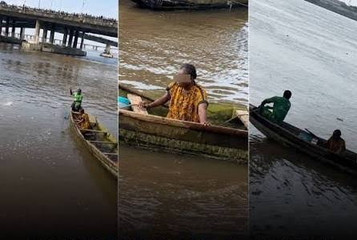
Addressing concerns over the demolition of shanties near the Third Mainland Bridge, Sanwo-Olu said the structures had expanded dangerously close to the bridge and high-tension power lines, creating a serious safety risk.
“I have been accused of destroying Makoko,” the governor said. “But the challenge is that the settlement was moving at an incredible speed and getting dangerously close to the bridge.
There are high-tension power lines underneath. I am not going to sit down and allow a situation where, in one day, 100 to 500 people could die.”
Sanwo-Olu emphasised that the government did not displace residents for political or economic gain, but simply moved them to safer areas to avert tragedy.
He said previous appeals to international agencies for collaborative redevelopment yielded no tangible results. “For six years, a United Nations agency said if I brought money, they would support development.
I told them I already had my own money. Till today, they have not returned. Only last week they said they had no funds,” he said.
The governor criticised some non-governmental organisations for exploiting the Makoko situation to secure donor funding instead of offering sustainable solutions.
“Of what benefit would it be for government to dislocate people? It can only be for their own safety. We will not sit back, allow disaster to happen, and then be blamed for inaction,” he added.
Beyond Makoko, Sanwo-Olu appealed for private sector support to strengthen Lagos’ security architecture through the LSSTF.
Priority needs include multipurpose helicopters and drones, armoured personnel carriers, water cannons, digital communication tools, smart CCTV cameras, patrol vehicles, tactical training and police infrastructure upgrades.
He noted that the state government continues to fund over 50 per cent of annual security expenditure, while the trust fund model has gained credibility due to transparency and accountability.
“We want to ensure Lagos remains secure. We are rebuilding the Command and Control Centre with state-of-the-art equipment and scaling up our safe city CCTV initiative,” Sanwo-Olu said, adding that improved emergency response capacity remains a top priority.
The governor also announced plans to commission 35 junior and senior secondary schools in Tolu, Ajegunle next month, accommodating about 22,000 students, as part of efforts to address educational deficits in densely populated communities.
Drawing parallels with the long-standing Okobaba sawmill challenge, Sanwo-Olu said his administration successfully relocated operators to Agbowa, ending recurrent fires after investing billions of naira and providing over 500 housing units.
He stressed that security, urban safety and social infrastructure must progress together for Lagos to remain attractive to investors.
“We need to keep our people safe, secure the future and assure investors that Lagos remains the right environment for growth,” the governor said.








 news1 year ago
 politics1 year ago
 entertainment1 year ago
 entertainment1 year ago
 politics1 year ago
 politics1 year ago
 events2 years ago
 events2 years ago