By Ehi Braimah,
Conversations during economic summits on Africa clearly indicate that governments alone cannot transform Africa’s economic fortunes.
While African countries bet on foreign investment, or depend on borrowing and aid, a thinking still rooted in our colonial history, something more fundamental is taking place across the continent: the capacity of young Africans to create businesses, jobs and solutions to problems around them.
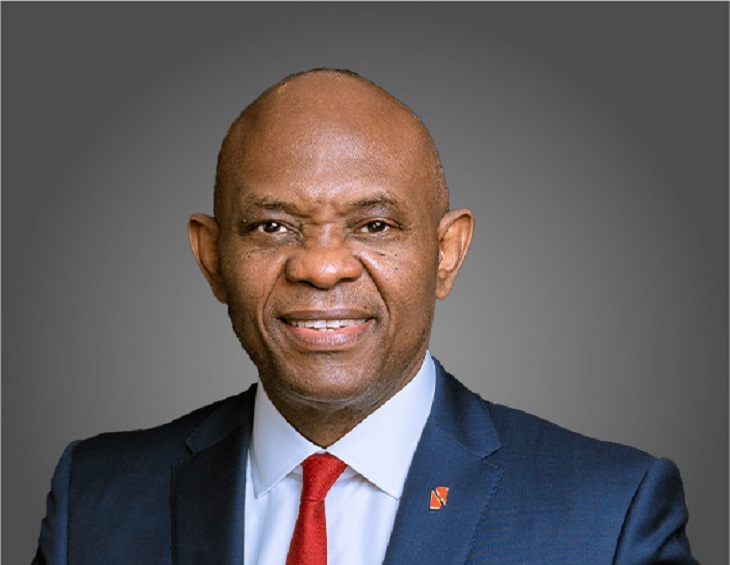
This significant shift by young Africans, demonstrating their capacity to innovate and launch businesses of their own, leads us to Africapitalism, the economic philosophy associated with Nigerian entrepreneur and philanthropist Tony Elumelu.
The philosophy is simple: Africans must play a central role in creating Africa’s economic prosperity.
At its heart is the belief that Africa’s private sector can drive economic and social development by creating long-term economic value and social wealth on the continent.
The Tony Elumelu Foundation (TEF) has translated this philosophy into an ambitious entrepreneurship programme that identifies, trains, mentors and provides seed capital to young African entrepreneurs.
The idea is simple but potentially transformational: give young Africans the tools and capital to build sustainable businesses, rather than waiting for them to find employment in economies that cannot create enough jobs.
In terms of scale and impact, the numbers behind TEF’s entrepreneurship intervention are substantial.
The story of Ms. Theresa Oluwagbemi which I am about to tell is not an isolated case, but part of an entrepreneurship ecosystem.
Since the launch of its flagship Entrepreneurship Programme in 2015, TEF has empowered more than 27,000 entrepreneurs across 54 African countries, while more than 2.5 million Africans have accessed business-management training through TEFConnect. In addition, more than US$100 million in seed capital has been disbursed so far to selected entrepreneurs.
According to TEF’s latest figures, businesses supported through the programme have collectively generated more than US$4.2 billion in revenue and created more than 1.5 million direct and indirect jobs.
TEF also reports that it has lifted 2.1 million Africans above the poverty line and positively affected more than four million African households.
The programme’s reach is also demonstrated by the extraordinary demand for it. In 2026 alone, TEF received more than 265,000 applications from young Africans across the continent before selecting a cohort of 3,200 beneficiaries – up from 1,000 beneficiaries when the programme was launched 11 years ago – with 51 percent being women.
Supported by his wife, Awele, Tony Elumelu took TEF to a new level, building partnership with major development institutions, governments and global foundations to scale the programme.
These partners include the European Union, UNDP, ADB, International Committee of the Red Cross, United States African Development Foundation, Organisation of African, Caribbean and Pacific States; German Development Finance Institution (DEG), German Agency for International Cooperation (GIZ), Google, UNICEF Generation Unlimited, IKEA Foundation, the UAE Office of Development Affairs, and Khalifa Bin Zayed Al Nahyan Foundation, among others.
I have had the privilege of experiencing the Africapitalism philosophy from the other side of the table as a mentor in the Tony Elumelu Entrepreneurship Programme.
Last year, I was assigned to mentor Theresa Ouwagbemi, a young Nigerian entrepreneur whose journey provides a compelling illustration of how relatively modest catalytic capital can unlock economic activity.
Theresa studied Mass Communication at the Federal University, Oye-Ekiti, graduating with a second-class upper division, but her entrepreneurial journey began before graduation.
She started producing and selling liquid soap on a very small scale, primarily to students and lecturers in her university.
Like many young entrepreneurs, she had an idea and the determination to pursue it, but lacked the resources to take the business to the next level.
Then came TEF.
Theresa heard about the programme through a mentor who encouraged her to apply.
She knew the selection process was competitive; nevertheless, she submitted her application, including her business pitch and proposal. When the email announcing her selection arrived, it became, in her words, “one of the best days of my life.”
That moment was more than an emotional milestone – it marked the beginning of a significant transition in her entrepreneurial journey.
She received the $5,000 seed grant in January, 2026, alongside access to the programme’s masterclass and mentorship.
The combination is important. Capital without knowledge can be wasted, just as knowledge without capital can remain theoretical.
Her business, “Boom Liquid Wash”, began to acquire the capacity to serve a wider market. Before the grant, Theresa’s business was constrained by the limited equipment available to her.
She had to turn down some contracts because she lacked the production capacity required to fulfil them.
The grant changed that equation. With the money, she acquired basic equipment needed for production.
Her customer base expanded beyond students and lecturers to include restaurants, office owners, other businesses and individual consumers. This is where the broader significance of Africapitalism becomes evident.
The US$5,000 did not simply become money in Theresa’s bank account; it became productive capital. It was converted into equipment, production capacity, customers and business relationships.
It enabled 23-year-old Theresa to accept opportunities that were previously beyond her reach. That is the multiplier effect that entrepreneurship can produce.
Theresa’s story also demonstrates why entrepreneurship development cannot be reduced to simply handing young people money.
The TEF model helps entrepreneurs to develop the knowledge, resilience and connections required to survive in a difficult business environment, and Nigeria’s business environment can be difficult.
Theresa recalls an occasion when the price of chemicals used in her production increased by more than 60 per cent. For a small business, such a sudden increase in input costs can threaten profitability and customer relationships.
How do you explain to customers that your costs have suddenly risen? How do you protect your margins without losing your market? How do you keep going when the economics of your business appear to be changing overnight?
These are not theoretical questions for young African entrepreneurs; they are everyday realities.
We discussed these challenges and Theresa learned to adapt.
Her entrepreneurial experience has also exposed her to opportunities and people she might not otherwise have encountered. While she was still a student, for example, she produced souvenirs for the Dean of her department.
More importantly, entrepreneurship has sharpened her ability to identify problems and develop tailored solutions.
That is another important dimension of Africapitalism: the entrepreneur is not merely a beneficiary of economic development, but becomes an agent of economic development.
Theresa’s customers are beneficiaries because they have access to locally produced products. Her suppliers also benefit from demand, and the businesses that buy her products benefit from reliable supply. As “Boom Liquid Wash” grows, its economic footprint can grow with it. Multiply Theresa’s experience by thousands of entrepreneurs across Africa and the significance becomes much larger.
This is why the Tony Elumelu Entrepreneurship Programme is important beyond the individual entrepreneurs who receive the grants.
The real ambition is to create an ecosystem in which African entrepreneurs thrive, solve African problems, build African businesses and create economic value within African economies.
Africa has no shortage of entrepreneurial energy. What it often lacks is the capital, infrastructure, market access, knowledge and institutional support required to turn entrepreneurial ideas into sustainable businesses.
The intervention of catalytic capital can therefore be significant, but money alone does not guarantee success.
Theresa has learned some hard lessons. One is particularly memorable: never sell on credit. Her experience reflects one of the perennial challenges facing small businesses: cash flow.
A small business may have customers and make sales on paper but still struggle if customers do not pay promptly.
Her second lesson is perhaps even more important: entrepreneurship is not a smooth journey.
There will be setbacks, unexpected costs, disappointments and moments of discouragement.
My advice to Theresa and other young entrepreneurs is to look back at what they have achieved and remember what motivated them to start in the first place.
That resilience is essential to building businesses that can survive beyond the initial intervention.
Theresa is currently undertaking her National Youth Service Corps programme in Enugu, in Eastern Nigeria.
She describes her experience in Enugu as beautiful, saying she has met amazing people and visited beautiful places.
But NYSC is only another chapter in her journey; her ambition is much bigger. She wants to grow “Boom Liquid Wash” into a business that meets global standards.
She plans to gain additional exposure by interning with companies that represent the blueprint she wants for her own business. She also plans to pursue an MBA because, in her words, building a global business requires “a global mindset, experience and exposure.”
This is precisely the kind of ambition that programmes such as TEF seek to nurture.
There is an important lesson here for Africa: development should not only be measured by the amount of money injected into an economy; it should also be measured by the productive capacity that such capital creates.
The money should create a business, acquire customers, and enable increase in production.
In addition, the entrepreneur should acquire new skills; the enterprise should become capable of accepting larger contracts, while creating opportunities for others, contributing to the economic value within the community and, ultimately, within the African economy.
This is the type of value chain that makes the Africapitalism conversation particularly relevant. Tony Elumelu’s intervention is premised on the idea that the African private sector can be an engine of development.
Rather than viewing philanthropy simply as the distribution of resources, Africapitalism seeks to connect enterprise, investment, economic empowerment and social impact.
Theresa’s story illustrates this connection at the micro level. Her production capacity grew and her customer based expanded with bigger ambitions. The next challenge for her is sustainability.
The ultimate test of any entrepreneurship programme is what happens after the grant. Can businesses survive? Can they scale and create jobs? Can they attract additional capital? Can they become suppliers to larger companies? Can they expand across borders? Theresa appears determined to pursue that journey.
Her aspiration to build a global-standard business is significant because Africa needs businesses that can grow, compete, innovate, export and create wealth.
The continent’s enormous youth population makes this even more urgent. Millions of young Africans will enter the labour market in the coming years, but no government can employ everyone.
Sustainable private enterprises must therefore become an increasingly important part of the solution. This is where Africapitalism intersects with Africa’s development challenge.
The goal is not capitalism for its own sake; it is the deployment of private enterprise and capital to generate both economic and social value.
Theresa’s journey from a small student-based liquid soap business to a growing enterprise with customers beyond her immediate environment may appear modest against the scale of Africa’s economic challenges, but transformation often begins at this level – one young African entrepreneur who moves from dependency to enterprise. That is how impact multiplies.
The real promise of Africapitalism lies not simply in the success of one Tony Elumelu entrepreneur, but in the possibility that thousands of entrepreneurs can become creators of value, employers of labour, innovators and contributors to Africa’s economic transformation.
Theresa’s story is therefore bigger than “Boom Liquid Wash” – it is a story about what happens when capital meets an idea, when mentorship meets ambition, and when opportunity meets determination.
Perhaps that is one of the most powerful ways to understand Tony Elumelu’s vision for Africa: don’t just give young Africans a chance to find jobs; give them a chance to build businesses that create jobs, wealth and solutions for Africa.
That is Africapitalism in action.





 news1 year ago
 politics1 year ago
 entertainment1 year ago
 entertainment1 year ago
 politics2 years ago
 politics1 year ago
 events2 years ago
 events2 years ago