NNPC secures $20bn in oil deals and raises production by 600,000 barrels per day, targeting 2 million bpd by 2027
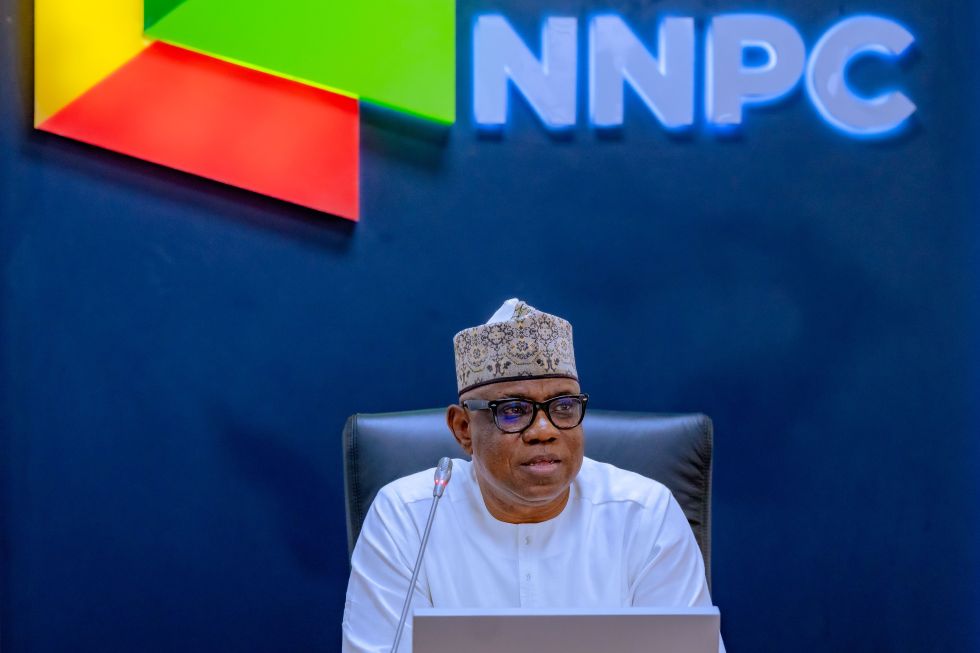
The Nigerian National Petroleum Company Limited (NNPC Ltd) has announced commercial agreements covering approximately $20 billion in oil and gas investment and a 600,000-barrel-per-day increase in national crude oil production, as Group Chief Executive Officer, Engineer Bashir Bayo Ojulari, outlined Nigeria’s renewed push to attract energy capital in Abu Dhabi, United Arab Emirates, on Tuesday, 3 November 2026.
Speaking at the 2026 Abu Dhabi International Petroleum Exhibition and Conference (ADIPEC), Ojulari said Nigeria’s crude oil output had risen from about 1.2 million barrels per day to 1.8 million bpd, attributing the improvement to reforms, better investment conditions and closer collaboration with industry partners.
The announcement marks a significant development in the country’s efforts to rebuild oil production and strengthen investor confidence after years of output challenges linked to underinvestment, operational disruptions, oil theft and pipeline vandalism.
Ojulari made the remarks during an Energy Talk titled “Nigeria’s Reform Agenda: Competing for Energy Capital”, where he presented the investment agreements and production growth as evidence that reforms under the Petroleum Industry Act 2021 were beginning to improve the sector’s competitiveness.
“The figure of 1.8 million barrels per day is a stage in a journey towards our objective,” Ojulari said, adding that NNPC was focused on maintaining infrastructure, protecting existing production and advancing projects capable of delivering further growth.
The company is targeting crude oil production of 2 million bpd by 2027, with its strategy centred on improving output from existing assets, sustaining current operations and bringing new developments closer to production.
On investment, Ojulari cited TotalEnergies’ Ubeta project, Shell’s Bonga South-West development and Eni’s Zabazaba project as examples of renewed international interest in Nigeria’s upstream sector.
He said commercial agreements covering about $20 billion in investment had been concluded, although the company’s announcement did not provide a detailed breakdown of the agreements, their individual values or the expected investment timelines.
The investment announcement comes as Nigeria seeks to unlock major offshore developments that require substantial capital and long project timelines.
In March 2026, NNPC announced presidential approval for a targeted fiscal incentive designed to support the Bonga South-West Aparo deepwater project, which was estimated to attract about $20 billion in foreign direct investment.
In August, NNPC and the project’s contractor parties executed additional agreements intended to advance the development towards a final investment decision.
The Bonga South-West project is expected to become one of Nigeria’s major deepwater production hubs, while the Ubeta and Zabazaba developments are also part of the country’s broader plans to expand oil and gas output.
Ojulari also disclosed that NNPC was building new relationships with partners, including the Abu Dhabi National Oil Company (ADNOC) and Chinese investors interested in Nigeria’s refineries.
The company is also engaging international oilfield service providers to expand technical and operational capacity, which NNPC considers important for executing projects and sustaining production growth.
Beyond crude oil, the NNPC chief executive outlined ambitious targets for Nigeria’s gas sector, saying the company was aiming to raise national gas production to 10 billion standard cubic feet per day by 2027 and 12 billion standard cubic feet per day by 2030.
The targets are expected to be supported by growing domestic demand and export markets, including regional gas supply initiatives.
Ojulari said the Obiafu-Obrikom-Oben (OB3) gas pipeline was completed in August 2026, while the Ajaokuta-Kaduna-Kano (AKK) pipeline was expected to deliver gas to Abuja before the end of the year.
The AKK project is intended to support power generation, data centres and industrial hubs, strengthening the role of natural gas in Nigeria’s economic development.
The company’s gas ambitions also include regional infrastructure projects. NNPC said countries involved in the Nigeria-Morocco Gas Pipeline had aligned and executed the necessary agreements, while Nigeria, Algeria and Niger had made progress towards the Trans-Saharan Gas Pipeline.
These projects are intended to expand access to regional and international markets, although their eventual impact will depend on financing, construction progress and the development of supply infrastructure.
Nigeria’s production recovery remains an important test of the reforms introduced under the Petroleum Industry Act and the government’s wider efforts to attract long-term energy investment.
While the reported rise to 1.8 million bpd signals progress, sustained growth will depend on the delivery of new projects, the reliability of existing infrastructure and the ability to maintain production amid operational and security challenges.
Ojulari emphasised that NNPC’s performance would ultimately be judged by implementation rather than announcements.
“Our track record will be judged by what is done and not by what is said,” he stated.
The 2026 ADIPEC gathering brought together energy ministers, executives, investors and technology leaders from more than 170 countries to discuss energy security, investment and supply.
For Nigeria, the message from NNPC was one of renewed momentum, with the company seeking to convert reform measures and investor interest into higher production, expanded gas supply and stronger economic returns.
The next phase will be measured by whether the announced agreements translate into committed capital, completed infrastructure and sustained output growth.




 news1 year ago

 politics1 year ago

 entertainment2 years ago

 entertainment2 years ago

 politics2 years ago

 politics1 year ago

 events2 years ago

 events2 years ago