The All Progressives Congress Presidential Campaign Council has restricted the authority of its spokespersons to three officials following the controversy surrounding Alwan Hassan’s failed demonstration of Nigeria’s 112 national emergency number on live television.
The decision, announced on Wednesday, November 11, 2026, came less than 24 hours after Hassan appeared on Channels Television’s Politics Today, where he challenged the programme’s presenter, Seun Okinbaloye, to test the emergency number during the broadcast.
Under the new arrangement, only the campaign council’s Director-General, Senator Abdulaziz Yari; the Minister of Solid Minerals Development, Dele Alake; and the Minister of Information and National Orientation, Mohammed Idris, are authorised to speak officially on its behalf.
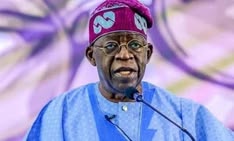
The announcement was made in a statement signed by President Bola Tinubu’s Chief of Staff and the campaign council’s Deputy Director-General (Administration), Femi Gbajabiamila.
The statement said the restructuring was intended to ensure more coordinated, disciplined and effective public engagement.
Hassan, alongside Ayobami Oyalowo, Kemi Asekun-Shittu and Adamu Fanda, was stripped of the authority to speak as an official campaign spokesperson. The four were, however, retained as members of the Directorate of Media and Strategic Communications.
Failed demonstration of emergency number
The controversy began on Tuesday, November 10, when Hassan appeared on Politics Today to discuss the Tinubu administration’s achievements ahead of the 2027 general election.
During the interview, he highlighted the 112 emergency number, describing it as a national service through which Nigerians could seek assistance during medical emergencies, road accidents, kidnappings, bandit attacks and other security situations.
To demonstrate its effectiveness, Hassan challenged Okinbaloye to dial the number during the live programme.
However, repeated attempts by the presenter and Hassan to connect to the emergency service were unsuccessful.
Hassan suggested that a network problem might have affected the calls, although the failed demonstration generated questions about the availability and reliability of the service.
The incident attracted criticism, particularly because the emergency number had been presented as one of the administration’s achievements.
Although the campaign council announced its restructuring shortly afterwards, its statement did not expressly identify Hassan’s television appearance as the reason for the changes.
112 emergency number predates Tinubu administration
The history of Nigeria’s 112 emergency number also became a subject of public discussion following Hassan’s television appearance.
The initiative predates the Tinubu administration, with the Nigerian Communications Commission (NCC) tracing its development to the Federal Government’s efforts to establish a nationwide emergency communications system.
On September 23, 2019, the Federal Government launched the 112 emergency call number alongside the first Emergency Communications Centre in Katsina State under the administration of former President Muhammadu Buhari.
The initiative followed earlier efforts to establish a coordinated emergency response framework involving telecommunications operators, security agencies and other relevant institutions.
In April 2026, the National Economic Council approved the adoption of 112 as Nigeria’s national emergency number across all levels of government and relevant agencies.
The council also approved a multi-agency implementation committee, with coordination led by the Office of the Vice-President and the NCC.
In September 2026, Vice-President Kashim Shettima directed relevant agencies to develop an operational roadmap for the nationwide rollout of the system.
Shettima said adequate funding and resources would be necessary to make the initiative effective.
The Federal Government subsequently constituted a committee involving the Nigeria Police Force, NCC, National Emergency Management Agency, Federal Road Safety Corps and other agencies to develop the implementation framework.
The distinction is that although 112 was launched in 2019, the government is still working towards a unified nationwide emergency response system.
Hassan’s earlier allegation against ministers
The latest controversy came weeks after Hassan generated another political debate over comments he made during an interview on Arise Television.
On October 22, 2026, the APC campaign spokesperson alleged that some ministers paid billions of naira to secure government appointments and subsequently sought to recover the money after assuming office.
He made the comments while defending Tinubu’s direct involvement in managing government revenue and expenditure.
Hassan argued that some ministers prioritised recovering the money allegedly spent to secure their appointments rather than delivering on their responsibilities.
His remarks attracted criticism, with questions raised about whether he was referring to ministers serving under the Tinubu administration.
The APC subsequently clarified that Hassan was referring to practices under previous administrations and not ministers appointed by Tinubu.
The party’s National Publicity Secretary, Felix Morka, maintained that appointments under the current administration were based on merit, competence and the capacity to deliver.
Hassan did not identify any minister or provide documentary evidence to substantiate the allegation.
His latest controversy has therefore placed renewed attention on the campaign council’s decision to narrow the number of officials authorised to communicate its position publicly.
The restructuring comes as political parties intensify preparations for the 2027 general election, with the APC seeking to manage its public messaging and defend the Tinubu administration’s record.




 news1 year ago

 politics1 year ago

 entertainment2 years ago

 entertainment2 years ago

 politics2 years ago

 politics1 year ago

 events2 years ago

 events2 years ago