Ajibade Super Falcons captain urges Nigeria to learn, improve and prepare better after WAFCON exit and World Cup qualification failure
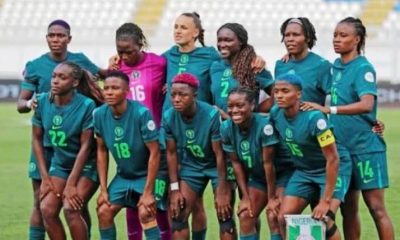
Super Falcons captain Rasheedat Ajibade has urged Nigeria to learn from a difficult 2026 Women’s Africa Cup of Nations campaign after the Super Falcons suffered successive defeats to Cameroon and South Africa in Morocco.
Nigeria’s disappointing tournament ended with a 1-0 quarter-final loss to Cameroon on 9 August, denying the defending champions an automatic place at the 2027 FIFA Women’s World Cup.
The Super Falcons were then beaten 2-1 by South Africa in the continental play-off on Thursday, ending their hopes of reaching the global tournament.
The defeat to Cameroon was particularly damaging because a quarter-final victory would have secured both a place in the WAFCON semi-finals and automatic qualification for the World Cup in Brazil.
Nigeria were subsequently given another opportunity through the play-off involving the quarter-final losers, but South Africa took advantage of the opportunity in Casablanca.
Thembi Kgatlana opened the scoring for Banyana Banyana in the 56th minute before captain Refiloe Jane doubled the advantage in the 77th minute. Christy Ucheibe pulled one back from the penalty spot in stoppage time, but Nigeria could not find an equaliser.
For Ajibade, the setbacks have offered an important lesson about the changing nature of women’s football on the continent.
“To be honest, my biggest lesson is just gratitude. We should be grateful,” Ajibade said after the South Africa defeat.
She also warned against complacency, stressing that Nigeria can no longer approach major African tournaments with the assumption that past dominance guarantees success.
“We should learn not to be lax because the competition is fierce now. We must realize we’re not invincible; we just need to prepare more, get better, and demand more of ourselves individually and collectively,” she said.
Ajibade’s comments come after a painful campaign for a side that entered the tournament as defending champions and Africa’s most successful women’s national team.
Nigeria had won the previous WAFCON edition in Morocco in 2025, with Ajibade named Player of the Tournament after helping the Super Falcons secure their 10th continental title.
The 2026 campaign therefore represented a stark reversal. Nigeria’s quarter-final exit also marked the first time the country had failed to reach the semi-finals of the competition, according to reports following the Cameroon defeat.
The failure to qualify for the 2027 World Cup adds another painful dimension. Nigeria had appeared at every edition of the women’s global tournament since its inaugural staging in 1991, making the latest setback a significant moment for the team.
Ajibade, who plays for Paris Saint-Germain, featured throughout Nigeria’s campaign but acknowledged that the team must respond constructively rather than dwell on the disappointment.
Her message reflects a broader reality in African women’s football, where established powers are facing increasingly competitive challenges from sides such as South Africa and Cameroon.
For the Super Falcons, the immediate challenge is to turn the painful experience into meaningful change. Better preparation, stronger competition for places and greater consistency will be crucial if Nigeria are to reclaim their position among Africa’s leading teams.
Ajibade’s call for the team to “get better” offers a measured response to one of the most difficult campaigns in the Super Falcons’ recent history.




 news1 year ago
 politics1 year ago
 entertainment2 years ago
 entertainment2 years ago
 politics2 years ago
 politics1 year ago
 events2 years ago
 events2 years ago