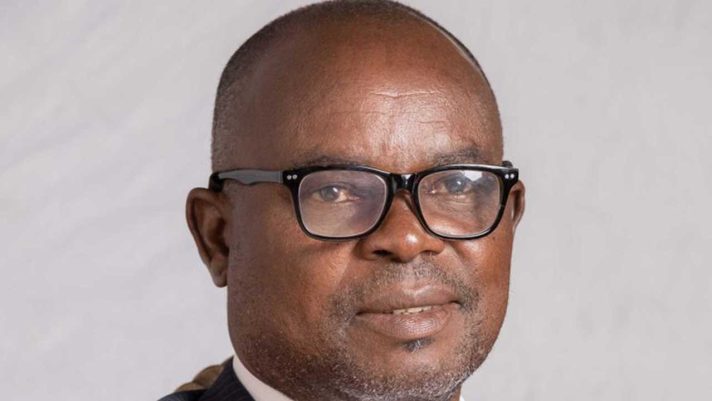
Bolanle Bolawole warns against fake prophets in a New Year message urging Nigerians to reject deception, embrace honest work and spiritual discipline
“Be not deceived; God is not mocked: for whatsoever a man soweth, that shall he also reap” – (Galatians 6:7.)
This is the “cash crop” season of prophets and soothsayers genuine and fake! This is the season they churn out all manner of prophecies and make bizarre and outlandish declarations.
The more bizarre, the more fear they instill in the gullible; and the more expansive the dragnet they throw out, the more catch they stand to bring in.
Why do people believe them? Why do they have followers? People are gullible! People are ignorant! The people themselves are like the prophets they follow! Birds of a feather! As my people would say, “Eni n wa ifa n wa ofo.”
He who seeks to reap where he did not sow sets himself up to be conned.
Looked at closely, those who fall victim to 419ners themselves have the 419 DNA running in their veins.
Grandma taught me: What you are not supposed to eat, don’t bother to see if it smells good! If it smells good nko
These days they prophesy on all manner of subjects the serious and the unserious, national and international, surreal and sublime! They reel out hundreds of prophecies, reminiscent of those days when I used to play “te-te” or coupon. “Eyi je, eyi o je!” “Perm 2 from 4 or perm 3 from 5” kind of guesswork.
Willy Akinlude and Ehi Obinyan made a fortune from the forecast books they churned out week after week.
So also did all those sellers of “sure bankers” that were sure to draw between Sunday and Saturday morning but always failed on Saturday evening as the outcome of games were reeled out over the airwaves!
Baba Ijebu and the Koras smiled to the bank every week as pool stakers lived on hopes that never materialised.
Ebenezer Obey even waxed a record for “Face-to-Face” pools, encouraging stakers to make staking a must every week.
As an adolescent, I was caught in that web for years, wasting years of my life on pool staking or betting, hoping after hope, week after week to “kill Kora” or send Adebutu out of the market – none of which materialised! Instead, they bored holes in my pocket and almost ruined my destiny! Now, I can smell such situation from afar.
Those who trade on prophecies belong in this group.
Their prophecies are usually open-ended; are capable of different interpretations, and are packaged in such a way as to apply to diverse situations and personalities.
Some are deliberately positioned like the Sword of Damocles to hang over the head of the targeted victim.
Prophecies for sale! If you play ball, they can “see” a totally different prophecy again! They have no qualms turning full circle once the price is right.
Are these people aware that God has placed a curse on those who say “God said…”
when God said nothing? And also on those who add or take a jot out of what God says? Familiarity, they say, breeds contempt.
Therefore, many of these people think they already knew God close enough to circumvent or placate Him.
So, they can eat their cake and have it!
Competition (our place of worship is bigger and better than yours), membership drive (we have x million of members worldwide), riches (we are one of the 10 richest in the world), the fleet of cars and aircraft at the religious leaders’ beck-and-call, their fat bank accounts in local and foreign currencies, and their sacred-cow status are some of the factors that have caused many to derail.
Many are those who now hanker after filthy lucre.
Many are those who have missed it but are yet to know.
They will find out, to their chagrin, when they get to the gates of heaven.
Many are already aware but no longer give a damn!
The ignorance of followers fuels the shenanigans of their leaders.
Laziness to find out the truth and the gullibility that constrains followers to accept whatever is thrown at them
hook-line-and-sinker make them to become easy targets and lame-duck prey as leaders take them for a ride. God warns as stated above and my New Year wish is that you take heed!
“Be not deceived…” Deceived by who? By false prophets, seers, and soothsayers.
Don’t let them deceive you means they can or will seek to deceive you. Don’t fall for it! Let them try, because they will try, but don’t fall for their deceit.
“God is not mocked…” By who? By the same false prophets, seers, and soothsayers who say God spoke when He did not.
They reel out the conjectures of their own mind as prophecies.
No false prophet can mock God.
Rather than make God a liar, they are the ones that, ultimately, will be exposed as liars.
And in the fullness of time, they will reap their full reward.
The followers of fake prophets can also not deceive or mock God.
You know you do not deserve something, but a fake prophet comes your way and makes false declarations and you shout 21 alleluias! False hope! I listened to one asking the congregation at a vigil to shout their phone numbers and that money alert will start raining on them!
Now, the declaration which I think believers should follow in 2026 is this: “For whatsoever a man soweth, that shall he also reap.”
Sow nothing, reap nothing; not minding how fervently you pray, fast, and do vigil.
Sow cassava and then expect to reap yams with fervent prayer and fasting.
Grow beans and let the merchants of prophecies prophesy that you will harvest rice!
Whatsoever a man soweth… If you sow nothing, what will God multiply? The widow of Zarephath had something; the widow of one of the sons of the prophets had something; Jesus multiplied the little that the small boy had to feed the multitude; at the wedding in Cana of Galilee, although their wine got exhausted, they still had water!
Pastor Enock Adejare Adeboye, fondly called Daddy G. O., said at one time he sowed ties and soon afterwards he began to reap torrents of ties.
He asked God why, and God told him that was what he sowed.
He changed style and began to sow shoes.
After a little longer than what it took for his sowing of ties to bear fruits, he began to reap a harvest of shoes.
Thereafter he sowed cars and waited and waited.
Then he asked God why; and God told him the gestation period of one crop differs from another.
Soon, Daddy G. O. began to reap a harvest of cars.
Whatsoever a man soweth… Sow, pray. Sow what you want and prayerfully expect your reward. Not prophecies without sowing.
Not prayers over nothing.
If you multiply nothing a million times, you will still get nothing.
Sometimes I wonder why the people we often look down upon and derisively refer to as unbelievers have more kingdom wisdom than so-called children of God.
Listen to how the “Rain Doctor”, Majek Fashek, graphically painted God’s principle of sowing and reaping in his album “Send Down the Rain”:
“The sky look misty and cloudy Looks like the rain′s gonna fall today This morning I’ve been sowing my seed Waiting for the rain to drop and water Lord Hmm oh Lord yeah ′Cause I’m a hungry man And I don’t wanna be angry Please send down the rain to water up my seed yeah Send down the rain (4ce) Everything in life has got it′s time and seasons So you don′t have to ask me why You don’t expect to sow cassava, and reap up cocoyam You don′t expect to sow rice and reap up cassava Whatsoever I and I soweth in this world the more shall we reap…”
Majek planted his crop first and prayed to the Lord of the harvest afterwards.
He knew, there are seasons and also that he could not sow cassava and reap cocoyam.
But many of us sow this, but hope to reap something else!
Each time I listen to “Woju” by Kizz Daniel: “No be you I carry come/But na you I go carry go…”, I say, “Yes, that is the mentality of those who sow cassava but seek to reap rice! You came with this, but wanted to go away with that! What becomes of the person who came with what you now covet?
Such selfishness is the virus that plagues our society today.
No thought for the feelings of the fellow you are discarding so caverlierly! Coveting what does not belong to us. Taking what belongs to someone else.
Reaping where and what we did not sow and thinking, believing that it is God’s miracle! But does God rob Peter to pay Paul?
As we enter Year 2026, do away with prophecies that simply are ‘iwuru-wuru to the answer” and place all your trust and hope in God’s word and principles.
Whatsoever a man soweth… Sow and prayerfully expect to reap.
Learning from the example of Pastor EA Adeboye given above, you can decide what you expect to reap by what you sow.
Away with false prophets and their fake prophecies. Except you are a gambler! And except you want to perm this from that!
In Year 2026, work hard. Be honest and truthful in your dealings.
And be on top of your game or trade. Add value.
There are so many people out there who seek quality service and are ready to pay for it. Unfortunately, many are poorly trained these days.
Quality hands are scarce.
They come these days from Benin Republic, Togo and even India.
Nigerians want quick money.
Less work – or no work at all – but gargantuan reward.
When such prayers are said in places of worship, audience response would almost tear down the roof! But nothing changes year-in, year-out.
The people still remain the same. They remain poor.
Those who smile to the bank are those deceiving them.
In Year 2026, refuse to be conned.
There is one clean way you can change your situation: Stop following men – and women – who have deceived you, year-in, year-out.
Many of those who prophesied concerning the 2023 presidential elections and failed are still in the 419 business of churning out more and more prophecies.
If they have no shame – because to them it is business – what of their followers?
In business, the saying is, if you fail once, try again! But for the followers of such fake prophets, is it not said that once bitten, twice shy? How many times will my people be bitten before they become wise?
Be wise! Compliments of the season and Happy New Year!






 news1 year ago
 politics1 year ago
 entertainment1 year ago
 entertainment1 year ago
 politics1 year ago
 politics1 year ago
 events2 years ago
 events1 year ago