Osun school feeding programme receives renewed backing from Governor Adeleke, who urges donor and global support to boost child nutrition and learning
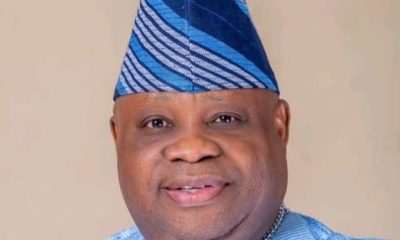
Osun school feeding programme has received renewed commitment from Governor Ademola Adeleke, who has urged stakeholders and global partners to support the state’s effort in boosting child nutrition and education outcomes.
Speaking at a high-level stakeholders’ conference held in Abuja on Wednesday, themed “Sustainability of O-Meal for Improved Children Nutrition in Osun State Homegrown School Feeding Programme,” the governor reiterated his administration’s dedication to ensuring the long-term success of the initiative, which began in 2006.
Represented by the Commissioner for Economic Planning, Budget and Development, Professor Abdulmaruf Adeleke, Governor Adeleke noted that the programme was crucial not only for enhancing academic environments but also for improving children’s nutritional health and future potential.
“This is about investing in the lives of children, women, and vulnerable citizens. Every financial or technical contribution directly impacts children, fosters a more equitable society, and helps define a roadmap for sustainability and development,” Adeleke stated.
Despite inflationary pressures on food prices, the Osun school feeding programme has managed to reach thousands of pupils consistently.
Governor Adeleke appealed to donor agencies, philanthropists, and development partners to work collaboratively with the Osun State Government to ensure that the initiative continues to thrive.
The programme, run in partnership with the African Union Development Agency-New Partnership for Africa’s Development (AUDA-NEPAD), uses a homegrown food supply model to boost both nutrition and local agriculture.
Among those present at the event were representatives of the Japan International Cooperation Agency (JICA), the United Nations World Food Programme (WFP), AUDA-NEPAD, and officials from the embassies of Tunisia and the United Arab Emirates.
Also in attendance were technocrats, private sector actors, and key government representatives.
Since its inception in 2006, the O-Meal programme has stood as a beacon of consistency and innovation, making Osun the only sub-national in Nigeria to have maintained an uninterrupted and structured school feeding initiative.
In her opening remarks, Chief Mrs. Nike Adeleke, the State Commissioner for Federal Affairs, described the O-Meal initiative as a pioneering model in Nigeria’s education and nutrition sectors.
“Since its inception in 2006, the O-Meal programme has stood as a beacon of consistency and innovation, making Osun the only sub-national in Nigeria to have maintained an uninterrupted and structured school feeding initiative. The programme currently benefits over 200,000 children directly,” she said.
Representing the CEO of AUDA-NEPAD, Mr. Agymi Abubakar praised Osun’s unwavering commitment to the programme. He said the benefits go beyond addressing hunger to driving up school enrolment and fostering a more productive future workforce.
“O-Meal is a direct, impactful translation of national priorities. We are not only addressing immediate hunger but also enhancing school attendance and educational outcomes. President Bola Ahmed Tinubu’s focus on human capital development and food security aligns with the first aspiration of Agenda 2063—‘A prosperous Africa based on inclusive growth’,” Abubakar said.
He also encouraged sustained budgetary commitments and greater private sector participation, calling the programme a catalyst for long-term health and economic improvements.
Dr Sanjo Faniran of the Federal Ministry of Budget and Economic Planning, Adaku Ekpo of the UN WFP, and Yetunde Adeniji, Senior Special Assistant to the President on the Renewed Hope National Homegrown Feeding Programme, echoed similar support.
In closing, the governor reaffirmed that Osun would continue to lead by example, demonstrating that political will and strategic partnerships can deliver long-term social benefits.




 news1 year ago

 politics1 year ago

 entertainment2 years ago

 entertainment2 years ago

 politics2 years ago

 politics1 year ago

 events2 years ago

 events2 years ago