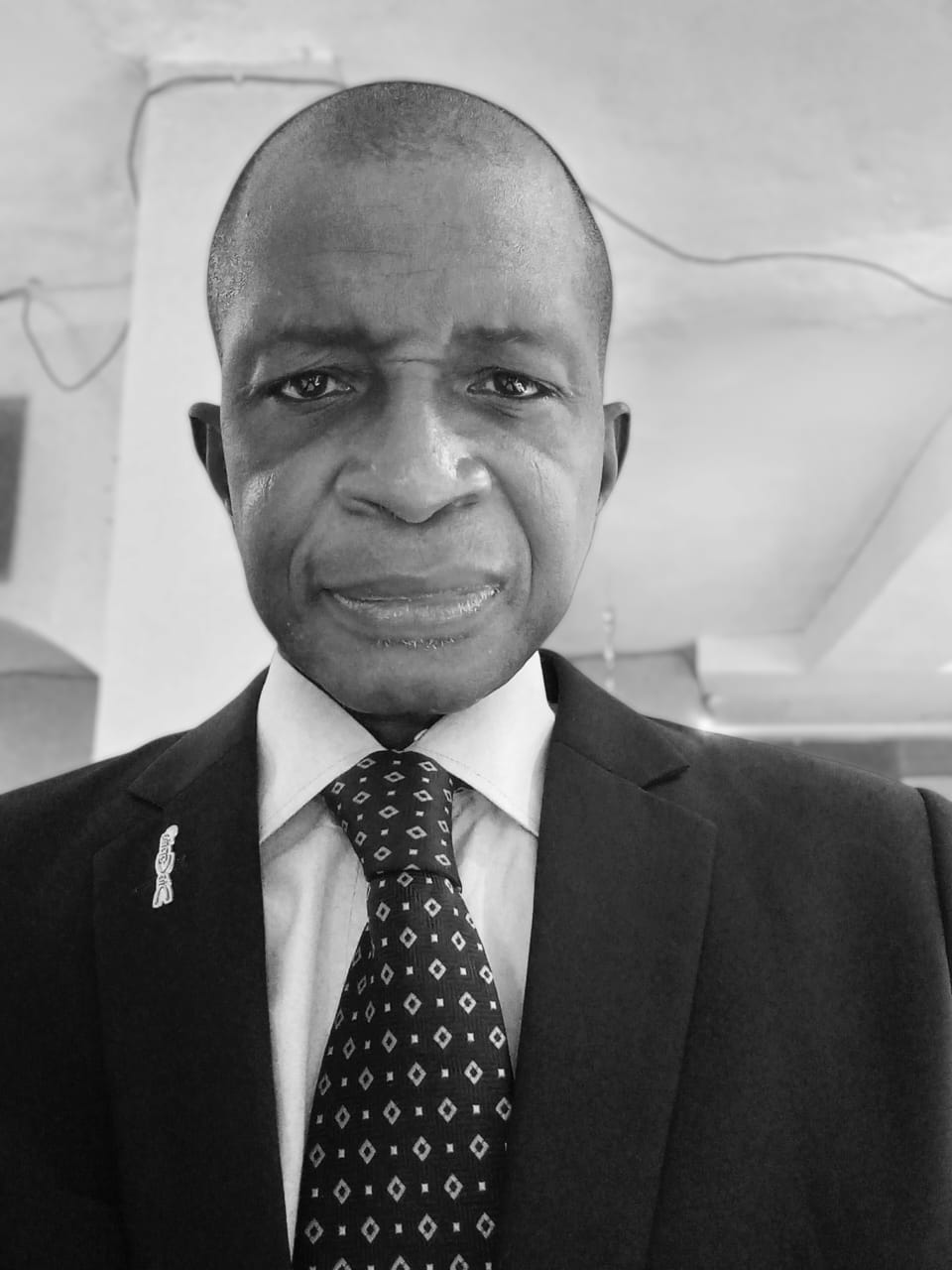
By Osoba Otaigbe,
Why Nigeria’s next economic breakthrough must turn human energy into organisational productivity
The Conversations That Started My Thinking
Recently, I had the opportunity to facilitate two training programmes in Nigeria that caused me to think more deeply about productivity. The first was Maximising Personal Productivity and Positive Thinking, delivered with NNPC Academy. The second was Customer Relationship Management, delivered for the Federal Mortgage Bank of Nigeria at its Kaduna Training Centre.
The programmes were different in subject and purpose, but the conversations with participants kept bringing me back to the same question: Why do highly capable and hardworking people sometimes struggle to achieve their full potential within our organisations? I encountered some intelligent professionals, experienced managers and people genuinely committed to doing their jobs well. Yet our discussions also revealed something familiar about organisational life in Nigeria.
People often expend considerable energy navigating processes, overcoming institutional barriers and finding ways around systems before they can get the work done.
I left those engagements thinking beyond training. Nigeria does not lack capable people. We have ambitious leaders, intelligent professionals, innovative entrepreneurs and a remarkable capacity to improvise.
The deeper question is whether the organisations and systems within which our people work enable them to convert all that energy into its full productive value.
Understanding Nigeria’s Productive Chaos
This led me to a phrase that I believe describes an important part of the Nigerian economic experience: productive chaos. By productive chaos, I mean an environment in which enormous human energy, ingenuity and economic activity produce results despite, rather than because of, many of the systems surrounding them.
Nigeria is certainly productive. Travel through Lagos, Kano, Aba, Port Harcourt, Abuja, Kaduna or Onitsha and you encounter economic energy everywhere. People are trading, manufacturing, building, transporting, financing, designing and solving problems.
When electricity fails, businesses find alternative power. When conventional finance is difficult to access, entrepreneurs find other sources of capital. When distribution systems are inadequate, traders create their own networks.
When formal processes become slow, people develop workarounds. Nigerians have become remarkably good at making things happen.
There is much to admire in this resilience, but there is also a danger. We can become so accustomed to celebrating our ability to overcome difficult systems that we stop asking why the systems remain difficult in the first place.
The more important question is this: How much more could Nigeria achieve if our systems worked as hard as our people do?
Activity Is Not the Same as Productivity
Activity should not be confused with productivity. An organisation can have hundreds of hardworking employees and still be inefficient. A business can invest heavily in technology while maintaining poor processes. A government institution can employ highly qualified professionals while decisions continue to move slowly.
A company can send hundreds of employees on training programmes without knowing whether the learning subsequently improves performance. Everyone can be extremely busy while the organisation remains less productive than it should be.
Development economist Joe Studwell offers a useful perspective on this question. His work on economic development reminds us that economic activity by itself does not necessarily produce prosperity. Sustainable development requires economies to increase their productive capacity.
Agriculture, industry, finance, skills and institutions must increasingly work together to create greater value.
For Nigeria, this distinction is important. Our challenge is not simply to generate more economic activity.
We must become better at converting the enormous amount of activity already taking place into sustained productivity. That means moving from productive chaos to productive coordination.
From Productive Chaos to Productive Coordination
Consider an orchestra or afrobeat band containing fifteen outstanding musicians. Every musician may be exceptionally talented, but if each person plays a different composition at the same time without a common score, individual excellence produces noise. The problem is not talent. The problem is coordination. The musicians need a common score, clear direction, disciplined practice and the ability to listen to one another.
Organisations are not very different from that example. A company may have talented people, technology, financial resources and an ambitious strategy and still underperform because these elements are poorly connected. Strategy must connect with execution. Leadership must connect with accountability. Training must connect with performance.
Technology must connect with processes. Customer promises must connect with customer experience. Investment must connect with measurable outcomes.
This is why Nigeria does not simply need only more talented people. We need organisations capable of multiplying the talent we already have. Productive coordination is what turns individual effort into institutional capability.
From Coordination to Transformation
Productive coordination creates the conditions for productive transformation. Transformation is a word we use frequently in Nigeria, but perhaps we need to become more demanding about what it means.
Transformation is not simply introducing new technology, restructuring an organisation, engaging consultants or sending employees for training. The real test should be much simpler: What changed?
If an organisation introduces new technology, what improved? If 500 employees are trained, what changed six months later? If consultants redesign an organisation, what became more efficient? If a department is restructured, did decision making improve? If a customer service programme is introduced, did customers actually experience better service?
Transformation should ultimately be measurable. Decisions should become faster. Processes should become simpler.
Managers should lead better. Employees should understand priorities. Customers should receive better service.
Resources should generate greater value. Innovation should move from conversation to implementation. Accountability should become part of organisational culture.
Diagnose Before You Prescribe
My recent training experiences reinforced another lesson. Training matters, but not every organisational problem is a training problem.
Sometimes what appears to be an employee performance problem is actually a management problem. What appears to be a technology problem may be a process problem.
What looks like a customer service problem may originate much deeper within organisational culture.
What appears to be poor execution may result from employees not understanding the organisation’s strategy.
When we diagnose the problem incorrectly, we can spend considerable resources treating symptoms while leaving the underlying problem untouched.
Before asking, “What training do our people need?”, perhaps Nigerian organisations should first ask a more fundamental question: “What is preventing this organisation from performing at its full potential?”
That question changes the conversation. It moves us from programmes to problems, from assumptions to evidence and from interventions to measurable outcomes.
It also encourages leadership to look at the organisation as an interconnected system rather than treating every challenge in isolation.
Productivity Is a National Question
There is a wider national reason why this matters. We usually discuss Nigeria’s economic future through the language of government policy.
We talk about GDP, inflation, exchange rates, interest rates, infrastructure, taxation, foreign investment and government expenditure.
These issues are important, but national productivity does not happen somewhere abstractly called “the economy”. It happens every day inside organisations.
A farmer becomes more productive. A factory becomes more productive. A bank becomes more productive. A government department becomes more productive. A hospital becomes more productive. A university becomes more productive.
A logistics company becomes more productive. A small business becomes more productive. Multiply these improvements across thousands of organisations and eventually we are no longer talking simply about organisational productivity. We are talking about national productivity.
Nigeria’s next productivity revolution may therefore be quieter than we imagine. It may not begin with one spectacular national project.
It could emerge through thousands of improvements taking place simultaneously across our institutions and businesses.
Imagine a government agency reducing a process that once took three weeks to three days. Imagine a bank removing unnecessary stages from a customer’s journey.
Imagine a manufacturer discovering the real reason production is below capacity and addressing it. Imagine a family business developing governance structures that allow it to flourish beyond its founder.
Imagine an organisation returning six months after a major training programme to measure what actually changed.
Each improvement may appear small when viewed independently. Across thousands of organisations, however, these improvements begin to change the productive capacity of a nation.
Introducing OARE360
It is from this conviction that I have been developing OARE360, Organisational Advancement, Readiness and Excellence 360. OARE360 begins with a simple principle: diagnose before you prescribe. Its purpose is to help organisations understand their organisational health and readiness, identify the factors constraining performance, determine the interventions genuinely required and measure whether improvement actually takes place.
The starting point should not always be the assumption that technology will solve the problem, that another restructuring exercise is required or that another training programme will automatically improve performance.
The starting point should be understanding the organisation itself. What is working? What is not working? Why? What needs to change? What should leadership prioritise? Most importantly, how will we know whether the intervention has worked?
OARE360 is therefore part of a wider proposition. If we want a more productive Nigeria, we must deliberately build more productive Nigerian organisations.
Stronger organisations create better jobs, use resources more efficiently, develop people more effectively, serve customers better and create greater economic value.
From Organisational Productivity to National Prosperity
Nigeria does not lack ambition. We do not lack entrepreneurs. We do not lack intelligence. We certainly do not lack hardworking people.
Our deeper challenge is to create organisations and institutions capable of converting these strengths into sustained productivity.
For too long, one measure of Nigerian ingenuity has been our ability to succeed despite difficult systems.
There is something admirable about that resilience, but resilience should not become an excuse for inefficient systems.
We should aspire to a Nigeria where systems release human potential rather than consume so much of it.
Imagine organisations where talented people do not spend much of their energy navigating avoidable obstacles.
Imagine decisions informed by evidence, investment in people producing measurable improvement, technology simplifying processes, institutions learning from experience and businesses scaling because their systems can scale with them.
This is the journey I believe Nigeria now needs to pursue:
Productive Chaos → Productive Coordination → Productive Transformation → National Prosperity.
Nigeria has already demonstrated that its people can produce extraordinary results in difficult circumstances. The next chapter of our development should be even more ambitious.
We must build organisations and institutions capable of releasing the extraordinary potential already present in our people. That is the productivity conversation Nigeria now needs.







 news1 year ago
 politics1 year ago
 entertainment1 year ago
 entertainment1 year ago
 politics1 year ago
 politics1 year ago
 events2 years ago
 events2 years ago